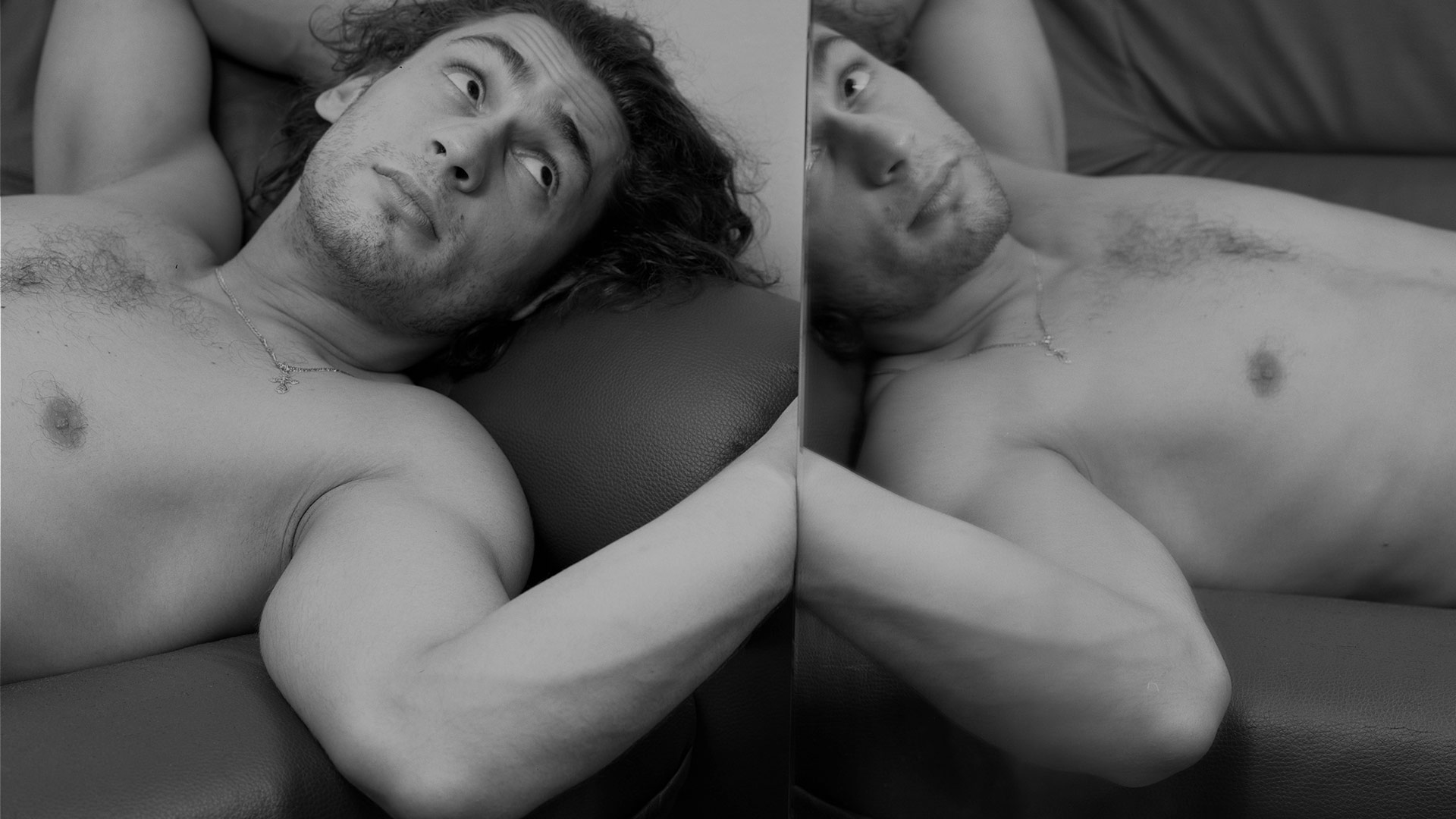
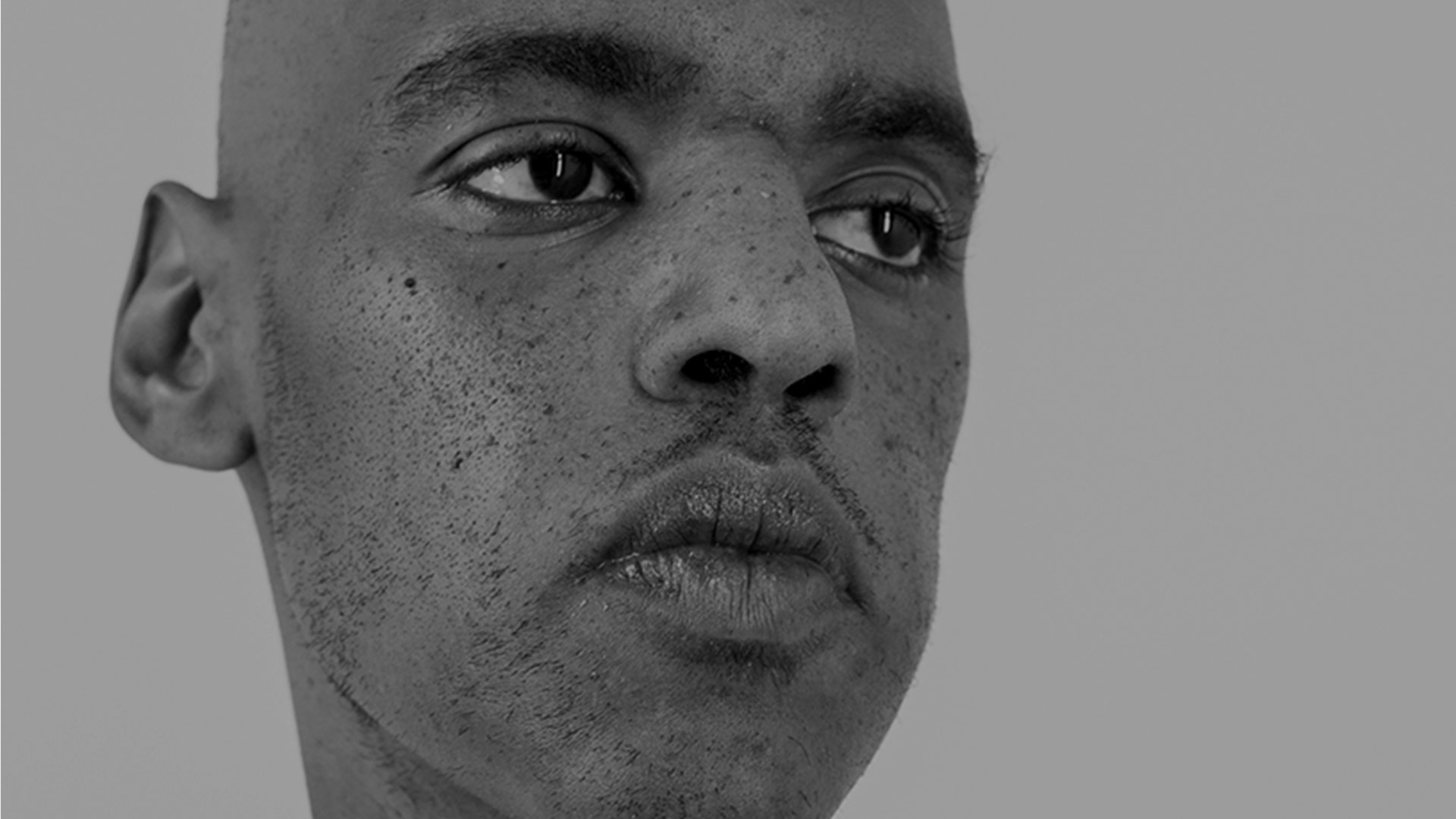
Noah Davis

Despite being one of the most fluid and ever-expanding fields of human endeavor, art has unfortunately become one of humanity’s more elitist practices. And its exclusionary state has been compounded through the contemporary art world’s perpetuation of racist and classist divisions. Disparities of inclusion exist in nearly every aspect of the field—from the racial breakdowns of museum staffs and visitors to the percentages of artists of color in museum collections.

Standard galleries and museums have traditionally operated as rarified spaces whose aesthetic fail to resonate with certain groups— and this has allowed contemporary art’s gatekeepers to restrict the scope of legitimization and access to these same individuals and communities. After over a century of this type of selective reach, museums are finally beginning to recognize these shortcomings, and are addressing them through more equitably curated exhibitions and programming.

Painter and installation artist Noah Davis was about to be part of this paradigm shift prior to his sudden death from a rare form of soft tissue cancer in 2015. Davis, co-founded The Underground Museum in 2012, with his wife Karon, and it has existed as a revolutionary space in the contemporary art world ever since.

Located in the predominantly black-and-Latino neighborhood of Arlington Heights in Central Los Angeles, the museum has been able to bring quality art to a community that at the time of its founding had no access to it within walking distance. The UM, as it’s affectionately known, now serves as everything from a gallery space to a garden to a film club.

Davis’ founding of the UM was heavily influenced by his father, Keven Davis, a sports-and-entertainment lawyer who represented several notable athletes and musicians during his career. In 1990 he agreed to work pro-bono for two aspiring tennis players named Venus and Serena Williams. Davis’ mother, Faith Childs-Davis, was a teacher who encouraged Davis and his brother’s pursuit of art.  After growing up in Seattle, he would go on to study painting at the Cooper Union in New York, and his brother, Kahlil Joseph, pursued film in L.A., working with director Terrence Malick and for photographer and commercial director, Melodie Mcdaniel.

In 2004, Davis moved to L.A. and secured studio space in the same building where Joseph was making work with several other artists. According to sculptor Thomas Houseago, this was the period when Davis began to talk about a “museum” that he wanted to build to bring together “art, entertainment and music.”

In 2008, he married Karon Vereen at Art Basel Miami Beach, and was included in the Rubell Family Collection’s “30 Americans” exhibition. The exhibition included renowned African-American artists such as Kara Walker and David Hammons— and at 25 years old, Davis was the youngest artist in the show.

Before Davis’ father’s death in 2011, he charged his sons with creating something that could amplify the collective image and voice of their community. The result would be the UM, one year later. Davis and his wife started it with storefront spaces that also doubled as the couple’s home and studio.

After several years of producing exhibitions that included he and his brother’s works, and recreations of pieces by notable artists that museums and galleries would not loan because of the UM’s location, Davis began to attract the attention of artists and curators—particularly Helen Molesworth. She had taken a new position as chief curator at MOCA in 2013, and after seeing Joseph’s m.A.A.d video installation at the UM, she decided to included it in a 2015 exhibition. Eventually, Joseph and Davis’ relationship with Molesworth would lead to a partnership with MOCA to loan works from their collection to the UM for exhibitions. Molesworth recognized that there were audiences and conversations that the UM could spark, that MOCA would never be able to, and thus gave the UM permission to use and interpret artwork from the MOCA collection however they chose.

Despite being hospitalized and overtaken by his illness in 2015, Davis continued to draft exhibition ideas for the UM—and while he was not able to see the second MOCA collaboration exhibition, “Non-Fiction,” he was able to leave this realm knowing that a new and more inclusive pathway of inspiration had been created for the next generation.

In May of this year, the UM hosted a talk between Thelma Golden and Lorna Simpson. During the discussion, Simpson referenced Davis’ legacy, and the UM, as essential to the artistic impulse and creativity of the community it serves. When a member of the audience asked Simpson how she nurtured those sentiments in her daughter, Zora Casebere took the opportunity to respond with her own perspective, stating that her mother has always vehemently supported her curiosity and creative pursuits.

“What’s become really important to me is just the intersections of things—and using art to study history, and using history to study art,” she said. “And figuring out how to consistently question, reevaluate, and broaden the way that I see the limits or boundaries of anything.”

These boundaries that Casebere referenced are some of the same ones that Davis sought to eradicate with the creation of the UM. The Arlington-Heights neighborhood, along with the contemporary art world at large, has now been left with a legacy that will continue to spur curiosity and creativity – particularly among those who have traditionally been excluded. Davis left us with the future of the contemporary art world: a multilayered and boundless canvas that can connect emotionally with humans of all backgrounds.
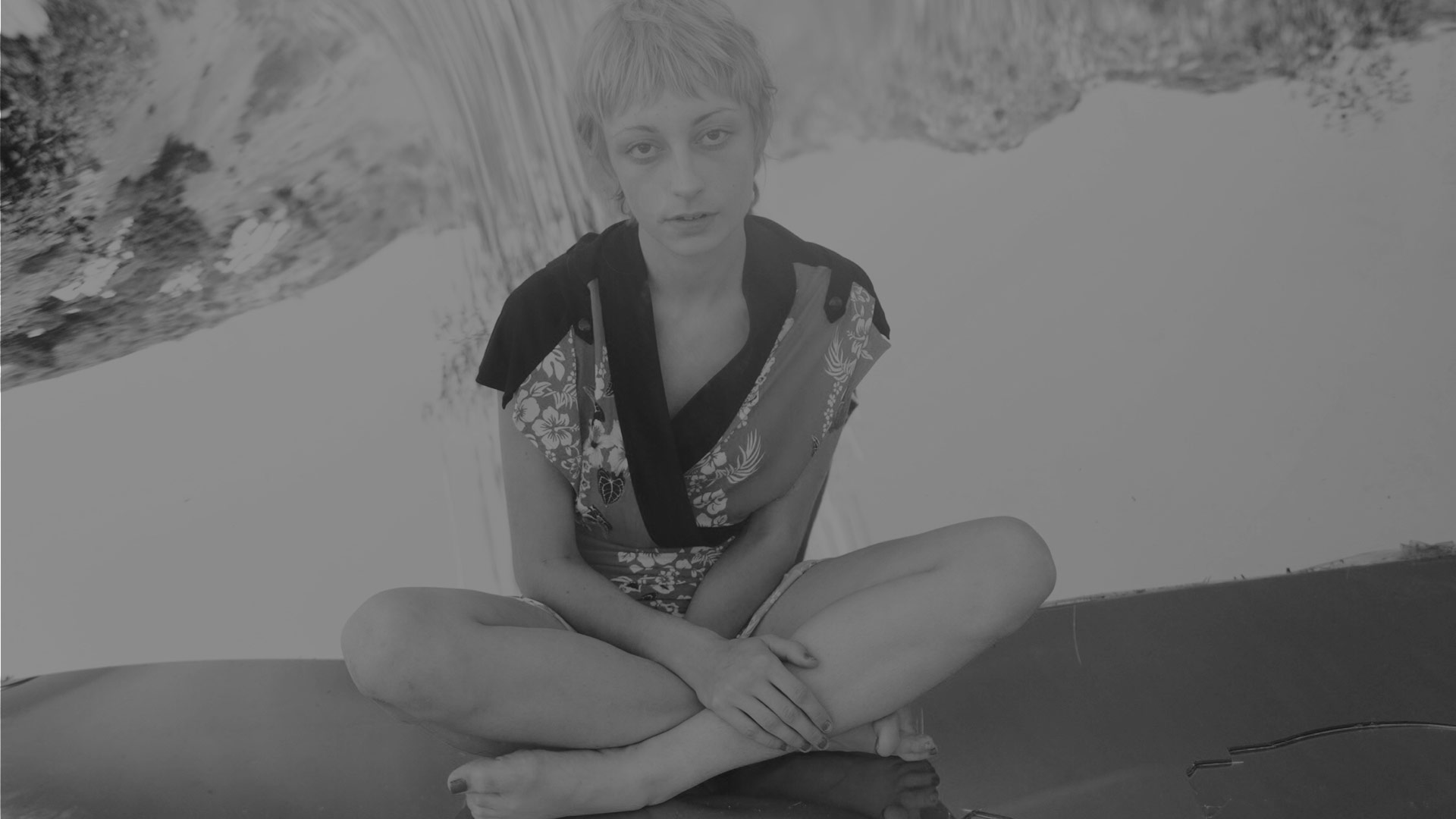
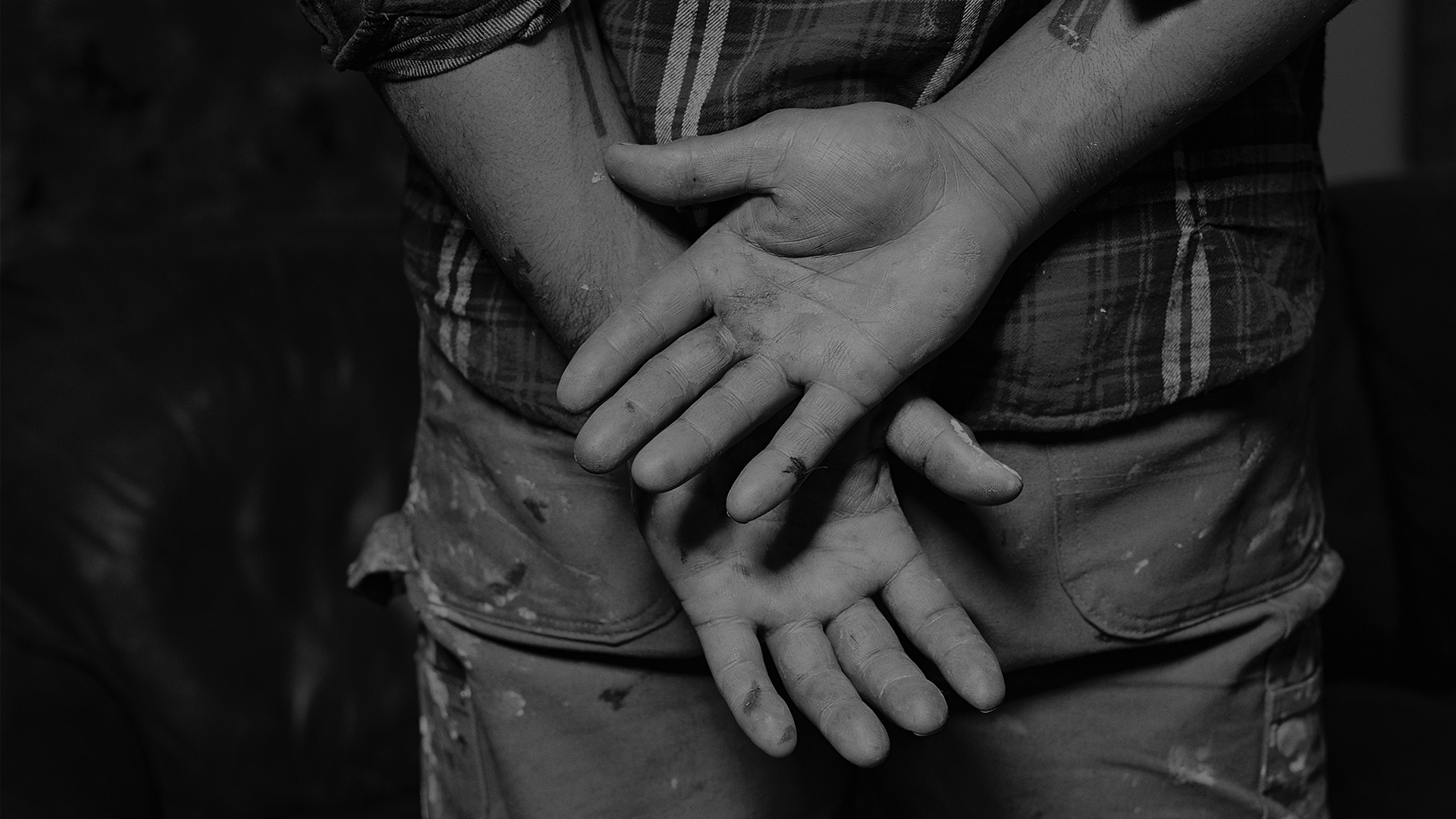
Arielle Holmes

As I think back on it, these photographs feel like the resultant data set from a strange particle collision: an of-the-moment indie actress trying on wigs, posing as the sun set on a bluff in Malibu. The photographer’s entourage: a shaggy dog and two daughters playing house in a vintage Volkswagen camper; the stylist, the makeup person and Aleim, doing their best to finish the shoot. And me, carelessly rolling the ISO dial up as twilight took over, feeling that strange sensation of being in a dream. One that would not be out of place if Fellini had made a movie about Los Angeles. To reach this conclusion, the day necessarily had to start on similarly what the fuck footing. Miles and world’s away in Koreatown.

Arielle Holmes is a gifted storyteller. And the stories she told on the drive to Malibu gave good reason as to her success as an actress. I would say author as well, but the manuscript that would form the backbone to her breakout hit, Heaven Knows What, as far as I can tell, was never published. For a film where the lead cast member did heroin on-screen, the good intentions of rehab and a promised published work retrospectively appear as an attempt at balancing the scales. Heaven gave way to American Honey, another critical and festival hit but much smaller role, which gave way to photoshoots like this one which gave way to who knows what.

One particular story involved the tale of living in a run-down building with her boyfriend at the time. “Up to the knees the place would flood sometimes,” she told us, adding that the worst part were the rats that they could feel scurrying about inside their mattress. After that story, she continued into her current situation with her boyfriend and plans for acting. It was the kind of rote shit you tell relatives at Thanksgiving. Sometime after this, she passed out in the passenger seat. It was now late in the afternoon and we were racing on the 101 to get to Malibu. The shoot was scheduled to begin at noon. We had waited for three hours in front of Ms. Holme’s apartment for her. Phone calls to her manager and friend yielded nothing. She came down briefly, before mentioning she needed to get something in the apartment. Another hour passed by before she returned so we could get on our way. Her manager said she told him that she was embarrassed by the extensions in her hair. Passing by the Capitol Records building I remember her mentioning she had once been an opera singer.

In front of the camera, she was the perfect subject for Ms. Gearon: pure, innocent, vulnerable and childlike. It became easy to see why so many, particularly filmmakers, had fallen under Ms Holme’s charms. Among certain filmmakers, there’s this kind of heavy adoration for non-actors, especially those whose authenticity is not bothered by a camera, crew and all the trimmings. It’s representative of that tug-of-war between a medium that captures reality and the way it’s manipulated to tell stories. As if, somehow real is better. There is no such reality in these photos. Just the strange captured light of a circus. And an underlying sadness that I admit, may come from having been there. And one last memory from the day.

Through surface checks on the internet, Ms Holmes has no projects coming out or in the works. Her book has yet to be published. So where is she? I remember a chorus of that question on the day of the shoot as well. We found her passed out in the bathroom.

Hugo McCloud

“I use beauty and attractiveness, materials and process, to grab a person’s attention, but at the same time there is real substance to each process,” says the artist Hugo McCloud in his airy and orderly Bushwick studio. The artist works simultaneously on multiple pieces, and today his large-scale abstract paintings line the studio walls while works-in-progress are arranged on the floor and tables. Several different series, and the tools to create them, are on display, a testament to how quickly McCloud is reacting to his own work, and moving his practice forward. There are boxes of hand carved wooden stamps, hanging polyethylene bags from various countries, and paintings that have been hammered, stamped, flamed and, in certain cases, covered with aluminum foil.

The artist comes from an industrial design background, so it is perhaps not surprising that process is central to his work. Describing the importance of using everyday materials and transforming them into objects of beauty, he explains: “Why would you put tar paper, or aluminum foil, on your walls? I’m using materials that you wouldn’t usually see manipulated to be attractive. And that is what my work is really about, finding the balance between what is raw, undesired and desired – a place where most people are uncomfortable – and then mixing materials and making it a very comfortable place to be.”

McCloud’s early fine art explorations began with copper and brass, using oxidation and rust to patina his pieces, a process he was familiar with through designing and constructing objects in his fabrication workshop. He has since adopted roofing paper as a canvas, applying adhesive, liquid tar and paint, so that the surface is thickly textured. McCloud describes “building” his paintings, rather than “painting” them, and he admits that he has only recently started using brushes, having previously been more comfortable applying paint with industrial tools.

The articulate, compelling artist and his artwork have received a great deal of attention over the past few years, and his well-publicized show at Sean Kelly Gallery in late 2016 was fully sold out. It was his second solo exhibition at the gallery, and was titled Veiled in reference to a group of new paintings that he covered with layers of aluminum foil. The foil obscures the underlying paint, so the viewer can only see the densely painted texture beneath the shiny, reflective material. McCloud’s rapid success in the art world is unusual, especially because he did not come through traditional art school channels, but his gallerist partially attributes this to his success. “He didn’t learn the theory, the conceptual underpinning, and I would say this allows him to intuitively pursue his medium through the material in ways that other artists might not.” Kelly continues, “I think the fact that he didn’t have boundaries and precepts set for him has enabled him to be very intuitive and very reactive. He’s reacting to the work itself and moving at a phenomenal rate.”

McCloud is very conscious of his desire to continue innovating. “When I did [the veiled pieces], I already had an idea of the next place I wanted to be.” Says McCloud. “Sometimes it’s hard for me to stay in one place. When I create a piece, I am continually searching for something more. I am continually looking for that new place.”

This in the moment feeling, and McCloud’s hands on approach, is enforced by his extensive international travel to countries including the Philippines, Mexico, Morocco and India. Observing, and more importantly, participating in local art practices and culture, the artist emphasizes that he is “learning through doing.” Helping to define his artistic practice as he explores different materials and processes, including wood block stamping, weaving and carving, these travels function as mini-residencies. Last fall, he spent almost three months at the Bellas Artes Projects in the Philippines, working alongside local artists to learn wood carving and resin techniques. He then employed these hand carved stamps in his paintings. While some designs are inspired by his travel experiences, he has also copied discarded furniture patterns found on the streets surrounding his studio, carving the designs into stamps he then imprints on paintings. McCloud’s focus on process is evident throughout his practice, but it also seeps through to how he lives his life, placing an emphasis on his personal experience and exploration.

McCloud’s recent gallery exhibition also featured new works made from strips of reclaimed polyethylene bags found while scouring local trash heaps in the different countries he has visited. McCloud points out that wherever he has traveled, these bags have the same trajectory, being used to store and transport material – often stamped and branded with a company name – then eventually discarded and recycled by waste pickers. Recovering these bags during his travels and returning them to his studio, he envisions a future show comprised of works made from the bags taken from various countries. Exhibiting them side by side would emphasize the broad commonality of the product and its use, but also highlight their subtle differences.

Understanding how things are made and built, and how similar processes can be accomplished in various ways, is important to McCloud. He comes from a family of “makers” his mother was a landscape designer and his father a sculptor, and he has internalized this legacy. “It is always interesting to see the same things being done, and how they are just done differently.” He says. “The way a building is built in India or South Africa is totally different, but the building is still a building. So it’s the idea of understanding how the same thing you do in your environment is done somewhere else though a different process.” This interest in commonality of material and experience, through different methods and cultures, seems to inform much of his approach. His desire to unite disparate materials and cultural practices in order to create successful art work is at the center of many of his processes.

The afternoon I visited his studio, McCloud was finishing a painting, and adding a new step to his veiled painting technique. Working from an image created in Photoshop, he was painstakingly cutting out strips from the sheets of aluminum foil applied to the painting’s surface. Removing the foil strips, the underlying paint is visible, revealing broad strokes of color. As with all his series, the handmade element of the work is plainly evident, both the veiling with aluminum foil, and then the cut-out strips. This new step progresses in a manner that is logical, both visually and conceptually. Once he has finished removing the strips, McCloud and his assistant hang the fresh painting for us to view on the studio wall, and it is striking how the strokes of the removed foil read as brushstrokes themselves – almost as if the artist who has only recently begun using paintbrushes – is becoming unveiled.

Ivan Vasiliev

The eyebrow-raising dance between Russia and America’s political heads of state—and the “global rich” style of our respective elites— may make it seem like our two countries finally have a certain culture of entertainment in common. But Aleim Magazine’s encounter with Russia’s hottest new male ballet dancer Ivan Vasiliev brings all that suddenly down to earth.

Vasiliev, formerly of the Bolshoi, is the principal ballet dancer at the Mikhalovsky ballet in Saint Petersburg. After he agreed to be featured in the magazine and sat for a photo shoot that inspired much curiosity, our attempt to complete the full interview hit a wall— or maybe we should say a curtain—and a reminder that Russia and America still two different and worlds.

First off, aside from the pioneering efforts of Pussy Riot, it seems that Russian stars aren’t too worried about getting our attention. Did you even know they have this “Brad Pitt of Ballet” over there? An athletic Adonis whose jumps reach Olympic heights. A tabloid darling with legions of fans. A prince charming who commands the stage with golden curls and chiseled cheekbones…a romantic heartthrob, who fell in love with his equally graceful longtime dance partner, Natalia Osipova—such a beautiful couple!—until he suddenly, impulsively announced his engagement to another ballerina, the sultry Maria Vinogradova! Ivan and Natalia transcended any hint of lingering romantic discord and they still dance together as partners. Maybe the pleasure of being a pair of dance gods in a virtuoso creative partnership is just that good.

It really makes you wonder why this exploding talent who could become the Baryshnikov of his day is still completely unknown in the mainstream over here! We were aware of Sergei Polunin, a more established crossover dance star, and fascinated by who his rival might be we find out about Ivan. He is a hot name in the small, exclusive world of international ballet, but aside from a review in the New York Times and a good article in The Guardian—about how he pushes his creative boundaries by embracing modern dance—he really hasn’t been much covered in America.

The photo shoot: Aleim and Dana Lixenberg fly to St. Petersburg upon Ivan and his team’s invitation to come over and do the piece. They are given full access to the Mikhailovsky Theater during his rehearsals. Then they watch a performance. Ivan glides around the stage like a gold-metal ice-skater. While not particularly tall or leggy, he’s known for his jumps. And there he is, flinging his body into the air with the abandon of a gymnast (or a drunken villager?) and the muscular athleticism of an NBA-All Star. This is the pinnacle of male ballet dance in Russia in our time, and he’s not doing it to be pretty. It’s an expression of power, freedom, and abandon, with the face of the Statue of David.

Dana doesn’t want to do the traditional contrived ballet dancer shots that everyone’s been doing since the invention of cameras, so Ivan meets the camera backstage at his practice studio and in his dressing room. He doesn’t say much— he’s swathed in a hoodie and a little impatient, alternating between an untrusting glower and goofy faces that break the ice but still bespeak a surprising self-consciousness. In sweats on a brown couch, he comes across a little like a fit frat guy taking a break after a game of flag football. Definitely not the sophisticated and statuesque flame he embodies onstage. In person, he’s a little bit of a dork.

Dana’s approach is the opposite. Very focused and precise, using a cumbersome 4×5 camera with lights, she’s careful with her tools and her subject, meticulous about what she commits to film. It’s an interesting juxtaposition in the room.

As THE young male ballerina in Putin’s Russia (and by the way, you-know-who is also, a fan), there are many questions Ivan seems uniquely positioned to answer. How does he feel about dance as a discipline— is it the last vestige of Russia’s aristocracy? Does it have a future in the world? What does he have to say to men who see ballet as a feminine discipline? Looking at his social media, we find him posed with Vladimir Putin in his Instagram feed, along with a video of himself voting, and the caption “I fulfilled my civic duty, did you find time to vote for the future of our country?” Does he have political opinions beyond this type of public service message? And what does he see on the horizon for his career? He’s already been branching out into experimental dance and choreography. What’s the inspiration? With his movie-star looks, could he imagine crossing over as a performer in film or TV as Baryshnikov did?

We are told that since Ivan does not speak very good English we should send any substantive interview questions to him in writing. His responses will be translated and then we can follow up with a call to chat. We send questions. Follow up. Weeks go by. After a few indications that his response is “coming soon,” nothing materializes. Finally, he and his people go dark. No begging off, no excuses, just full ghosting. In your face, America!

We know from experience that your average iconic international sex-symbol is sometimes just busy, disorganized, and diva-esque. And it’s clear that Ivan’s not playing the game of trying to be a celebrity in America— he’s serious about dance, which is turning out to be a rewarding use of time. But it’s impossible not to wonder about the cultural communication gap, and what happened there…Any way you slice it, it seems that even post-cold-war, post-glasnost, post-modern, post-everything there’s still curtain between our two worlds that have not been penetrated. Maybe it never will…but then again, Ivan, if you’re reading this, we’re ready when you are.