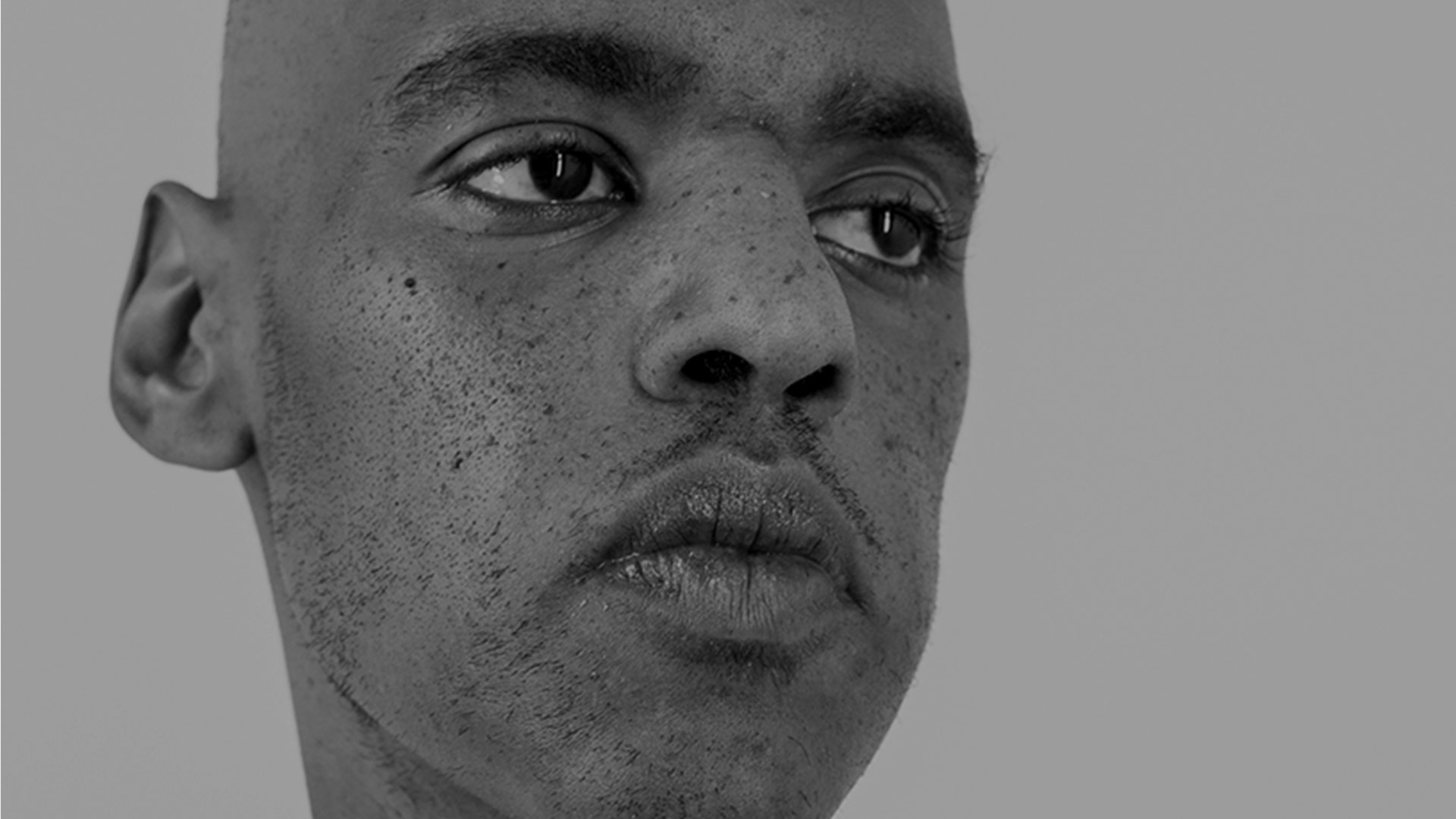
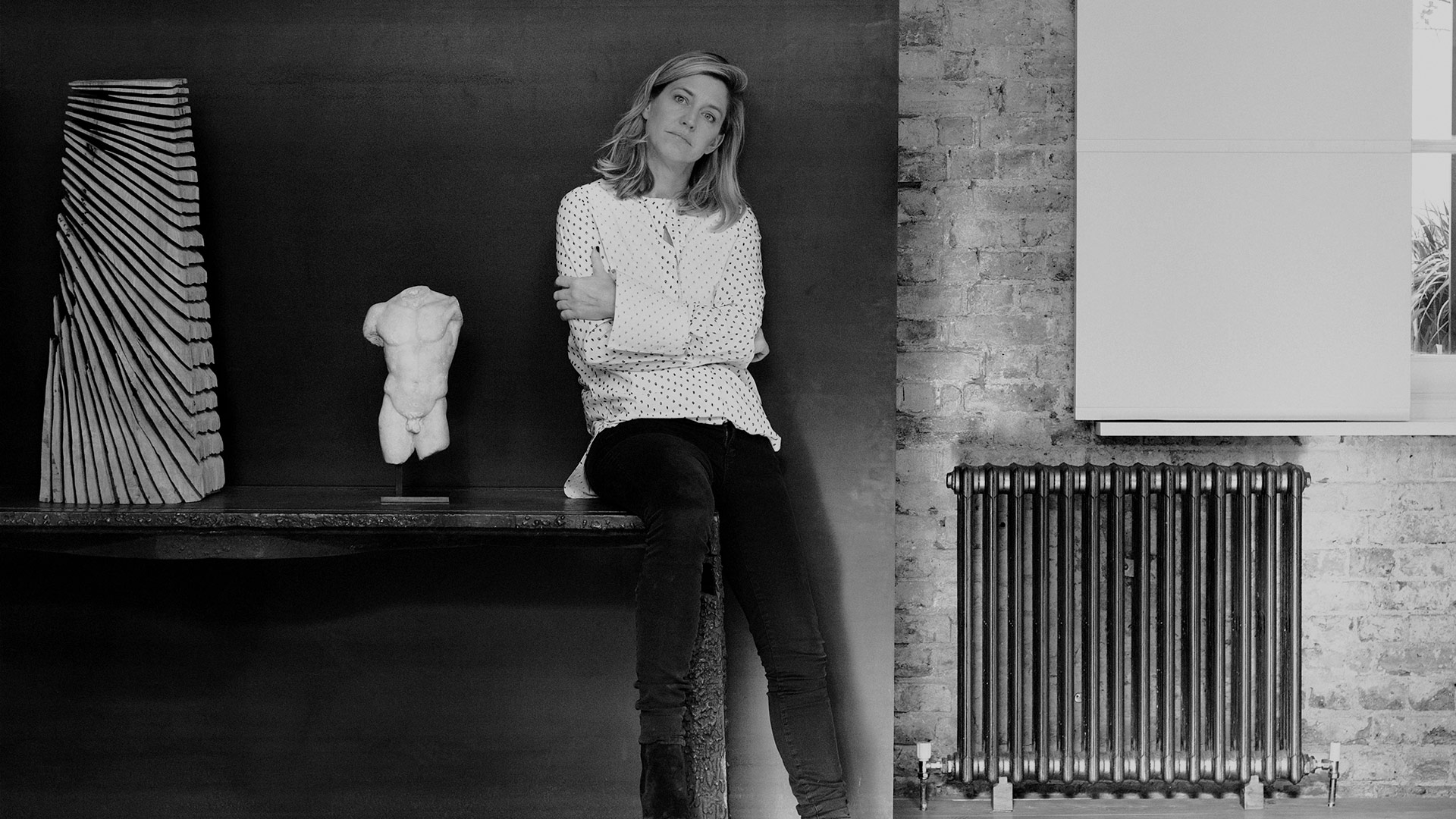
Noah Davis

Despite being one of the most fluid and ever-expanding fields of human endeavor, art has unfortunately become one of humanity’s more elitist practices. And its exclusionary state has been compounded through the contemporary art world’s perpetuation of racist and classist divisions. Disparities of inclusion exist in nearly every aspect of the field—from the racial breakdowns of museum staffs and visitors to the percentages of artists of color in museum collections.

Standard galleries and museums have traditionally operated as rarified spaces whose aesthetic fail to resonate with certain groups— and this has allowed contemporary art’s gatekeepers to restrict the scope of legitimization and access to these same individuals and communities. After over a century of this type of selective reach, museums are finally beginning to recognize these shortcomings, and are addressing them through more equitably curated exhibitions and programming.

Painter and installation artist Noah Davis was about to be part of this paradigm shift prior to his sudden death from a rare form of soft tissue cancer in 2015. Davis, co-founded The Underground Museum in 2012, with his wife Karon, and it has existed as a revolutionary space in the contemporary art world ever since.

Located in the predominantly black-and-Latino neighborhood of Arlington Heights in Central Los Angeles, the museum has been able to bring quality art to a community that at the time of its founding had no access to it within walking distance. The UM, as it’s affectionately known, now serves as everything from a gallery space to a garden to a film club.

Davis’ founding of the UM was heavily influenced by his father, Keven Davis, a sports-and-entertainment lawyer who represented several notable athletes and musicians during his career. In 1990 he agreed to work pro-bono for two aspiring tennis players named Venus and Serena Williams. Davis’ mother, Faith Childs-Davis, was a teacher who encouraged Davis and his brother’s pursuit of art.  After growing up in Seattle, he would go on to study painting at the Cooper Union in New York, and his brother, Kahlil Joseph, pursued film in L.A., working with director Terrence Malick and for photographer and commercial director, Melodie Mcdaniel.

In 2004, Davis moved to L.A. and secured studio space in the same building where Joseph was making work with several other artists. According to sculptor Thomas Houseago, this was the period when Davis began to talk about a “museum” that he wanted to build to bring together “art, entertainment and music.”

In 2008, he married Karon Vereen at Art Basel Miami Beach, and was included in the Rubell Family Collection’s “30 Americans” exhibition. The exhibition included renowned African-American artists such as Kara Walker and David Hammons— and at 25 years old, Davis was the youngest artist in the show.

Before Davis’ father’s death in 2011, he charged his sons with creating something that could amplify the collective image and voice of their community. The result would be the UM, one year later. Davis and his wife started it with storefront spaces that also doubled as the couple’s home and studio.

After several years of producing exhibitions that included he and his brother’s works, and recreations of pieces by notable artists that museums and galleries would not loan because of the UM’s location, Davis began to attract the attention of artists and curators—particularly Helen Molesworth. She had taken a new position as chief curator at MOCA in 2013, and after seeing Joseph’s m.A.A.d video installation at the UM, she decided to included it in a 2015 exhibition. Eventually, Joseph and Davis’ relationship with Molesworth would lead to a partnership with MOCA to loan works from their collection to the UM for exhibitions. Molesworth recognized that there were audiences and conversations that the UM could spark, that MOCA would never be able to, and thus gave the UM permission to use and interpret artwork from the MOCA collection however they chose.

Despite being hospitalized and overtaken by his illness in 2015, Davis continued to draft exhibition ideas for the UM—and while he was not able to see the second MOCA collaboration exhibition, “Non-Fiction,” he was able to leave this realm knowing that a new and more inclusive pathway of inspiration had been created for the next generation.

In May of this year, the UM hosted a talk between Thelma Golden and Lorna Simpson. During the discussion, Simpson referenced Davis’ legacy, and the UM, as essential to the artistic impulse and creativity of the community it serves. When a member of the audience asked Simpson how she nurtured those sentiments in her daughter, Zora Casebere took the opportunity to respond with her own perspective, stating that her mother has always vehemently supported her curiosity and creative pursuits.

“What’s become really important to me is just the intersections of things—and using art to study history, and using history to study art,” she said. “And figuring out how to consistently question, reevaluate, and broaden the way that I see the limits or boundaries of anything.”

These boundaries that Casebere referenced are some of the same ones that Davis sought to eradicate with the creation of the UM. The Arlington-Heights neighborhood, along with the contemporary art world at large, has now been left with a legacy that will continue to spur curiosity and creativity – particularly among those who have traditionally been excluded. Davis left us with the future of the contemporary art world: a multilayered and boundless canvas that can connect emotionally with humans of all backgrounds.

Eric Lentz-Gauthier

I’ve met lots of different folks out here in California. All kinds, from all over the world who’re doing the sorts of things they ain’t doing back where I come from. It’s why I love it out here in the wild west. You meet wild boys and wild girls chasing wild dreams; You start doing the same, or better yet, you find you’ve always been running down dreams.

Two-time aerobatic national champion Eric Lentz-Gauthier falls right in line. These days Eric’s living up in Northern California, having uprooted from Santa Cruz to live the rambling, hotel life and do all the traveling his sport involves. On a recent spring Monday I spoke with the mild-mannered, soft spoken, thirty-three year-old over the phone while he was driving to Sacramento to pick up building materials for his power plane, which he’s currently modifying.

Born and raised in Davis, California, Eric’s pursuit of flying began at the age of thirteen. The dream started long before that. “You know, the flying thing very much comes from the passion I had as a little kid,” Eric says. “Like a little kid; two, three, four years old, watching Top Gun everyday. I’d dream of flying to Mars!” His voice sounds almost joyful.
“That really shaped my aspirations as far as flying goes. My father was a transport pilot during Vietnam. I dunno how much nurture verses nature has to do with my career in flying. It’s hard to say.

What is aerobatics? it’s spinning in circles and flying fast towards the earth all while a heart shaped trail of white smoke spills out your tailpipe.

‘When I was in high school, I flew a training glider. It was limited in what it could do but it gave me great experience. It was kinda like driving an old Chevelle around a racetrack. I did that for about ten years. Then I had the opportunity to fly a glider. Going from the training glider to the glider was like going from the Chevelle to an F1! Those ten years, driving that Chevelle though, really helped me in the long run when I started flying aerobatics.”

Now, me, I’ve always romanticized the idea of being up in the air, above the clouds, looking down on the expansion of land with the freeness of a bird. But Eric’s views on flying are unique. “When it comes to actually flying,” Eric tells me, “I have kind of a different take than most people. I don’t fill it with the same kind of romanticism. Flying is a pretty isolating activity. There’s all these ideas of freedom attached to it, and I don’t feel that at all. I don’t have any of those sensations. I’m in this little pod. I’m cut off from the world.

“For the pilot who knows how to fly both glider and power planes,” Eric says, “there are two sides to the aerobatic experience. Power planes are are like race cars. You’re basically flying an engine with the smallest airplane possible wrapped around it. You’re crammed in this little cockpit, it smells like gasoline, there’s gas fumes everywhere, it’s hot, lots of vibrations, lots of noise. It’s not so pleasant. Gliding is a million times better. The glider is gorgeous. There’s nothing but air. There’s no loud motor or gas fumes. It’s like riding a car down a smooth highway.”

Summer is the season for aerobatic competition. In May Eric will be competing in Italy and later, in July, he’ll be in Poland for three more events, including the World Championships. “In the U.S.,” Eric tells me, “the sport is on a much smaller scale, with one of the main competitions taking place in Sherman, Texas.”

It’s then I realize just how small Eric’s sport actually is. I’ve been to Sherman before. It’s a one-horse town of about two thousand people. I used to go fishin’ down in the creeks with my buddies, way back when.

“There’s not a big following here in the U.S.,” Eric explains. “The U.S. is kinda like the Jamaican bobsled team. The big players are Poland, Germany, Hungary, Italy. It’s really cool to go over to Europe for the summer. You have a little more context. Over there, you feel like you’re part of something, whereas over here you have no context at all. You have to make it up for yourself.”

This will be Eric’s fourth time attending the world event. Last year he placed fifth, overall. “No American has ever won at the world events in the glider sport,” Eric says. “And I’m pretty sure I’m the first American to win an individual flight.”

The competition consists of a group of pilots who, one at a time, fly a sequence in what is called the competition box. They cannot during the flight go outside of the borders of this box which are made known to them by white markers down below. The pilots are given the sequence to fly upon arrival, whereafter the strategies and planning commence. “Experience is the most valuable asset in the sport. Especially when you don’t know your flight sequence until a day or two before,” Eric explains.

In preparing for the flight, the pilots walk through a mock sequence, using their hands as model substitutes for the plane. There’s much to gain from such a seemingly simple preparation method. “You’re trying to mimic the orientation you’re going to have while in flight. You’re visualizing and walking through the sequence. Watch people walk through these routines and you’ll see exactly what that flight will look like. It really helps,” Eric says. “The older guys, man, they’re good. They’re always so cool and calm. Their preparations are always so smooth. The way they run through the air with their hand is the same way they fly. It plays out just the way they planned. Younger guys are always overthinking it, aggressively going through their practice sequence, hands trembling. I really enjoy watching the older guys. You learn a lot.

“The real mental aspect of the sport takes place in the preparation. Once you’re up in the air, you really don’t have time to think. Up in the air I am trying to focus on what’s next.”

On the day of competition, the glider pilot is towed by a larger plane to a certain altitude near the competition box. The glider pilot unhooks the glider from the plane, and begins his flight sequence. Below, judges with a meticulous eye for detail tally up the score. Altogether, the flight lasts only fifteen minutes.

The night before my interview with him I made the mistake of watching videos of Eric in competition, and nearly puked after watching several minutes of discombobulated camera angles and the atmosphere being turned upside down. It looked equal parts exhilarating and terrifying.

“There is an element of danger,” Eric agrees, “but I don’t like to think about it. I’m really risk-averse. If I’m nervous I won’t get in a plane; I’m trying to keep it as safe as possible. For the most part, it is really safe. But that’s the way flying is, really safe until it’s not and then… somebody gets killed.”

When asked about the future, Eric tells me he dreams of taking the sport and technology of aerobatic aviation even further. The accolades and titles that come with winning competitions have opened doors for sponsorship and financial backing. These days he’s creating a personal, symbiotic relationship between Eric the plane designer and Eric the competitive flyer. As a child he had dreams of flying to Mars, and based on all he’s achieved so far, I have reason to believe Eric Lentz-Gauthier will one day be flying out, past the atmosphere, into that great spectacle of outer space, fulfilling another lifelong dream.

Over and Out.

Sofia Valdes

Emerging folk-singer/songwriter Sofía Valdés is the granddaughter of renowned Cuban singer/songwriter/Hollywood film performer, Miguelito Valdés, “El Babalou” and tamborera Silvia de Grasse. This summer, independent journalist Sara Harris skyped with Ms. Valdés from her family’s penthouse apartment in Panamá City with a view of the bahía over the City’s private marina, guitar in hand. This excerpt of their conversation in (English and Spanish) ranges from musings on artistic life as the daughter of an internationally renowned musical family to the sharp transition between the landscapes of Northwest Michigan -where Ms. Valdés studies, and Panamá City -where she was born and raised and spends her summers. At seventeen, Ms. Valdés is just coming into her own and has a distinctly fresh, honest, and open approach to her music.

SH: You write and sing in English mostly, but I get the sense that your personal influences come from experiences closer to home…

SV: I guess that here in Panamá, my influence comes from musicians, but mainly it comes from the people around me. Growing up in Central America, being a musician isn’t really something you would consider doing as a career. It’s more of a hobby, not like a job. You usually would not study to be a musician, but you’d study to be a doctor or a lawyer, or something like that. Growing up I was always told that I couldn’t be a singer who makes a living off of music or art. But that’s what I wanted to do. I was so mad people kept telling me that, so I began to study more and more, and that’s where my main drive and inspiration come from.

SH: But your songs are really uplifting and almost wistful. They don’t feel like they are addressing what you’re told you “can’t” do in life but rather what the future may hold and they feel rootedness in a sense of place…

SV: In Panamá as a whole, the beaches are so beautiful. Everytime I come back to the beach, I want to cry. I love it, and I have written so many songs about being on the beach growing up with my friends, and about so much that has happened in specific places around the country where there is so much nature and so much water. And in Michigan, the part that is inspiring is being away from home and realizing how much I love Panamá and how much I love everything about back home.

SH: Do you see the lake from your school at Interlochen Center for the Arts?

SV: We are right on Lake Michigan. And the wind is rough and cold and in your face when you walk. Even in June it’s chilly. And the people who live there wear shorts!

SH: How does the climate in Michigan influence the mood of your music?

SV: Michigan doesn’t inspire me to write music, but it reminds of how much I miss home. I am in northern Michigan, so I am up there with trees and nature and gets it’s really cold and really dry. It feels pretty sad in the winter, so that makes it easy to write songs. Because you’re alone.

SH: But that makes sense, since you are so far away from family, it can get nostalgic, I imagine.

SV: Yes. I go to a boarding school. I left home when I was sixteen. So It’s not like I just left home or had to leave, but more like I went off to college early. If you don’t go to classes, nobody tells you anything. You have to do your laundry, cook for yourself, wake up on time. You have to grow up a little bit faster. So once I was there, I was was more independent and had more of my own thoughts. It made me understand more about what I wanted to do as a musician and as a person.

SH: Did your family push you toward studying abroad?

SV: No! So what happened is that I always had this plan. I told my mom that I needed to leave home at sixteen. That was my goal in life. If I could manage to leave at sixteen, that meant I was able to convince the people around me that I was capable to do what I wanted. Who’s going to let their sixteen-year-old leave unless they really trust in you and believe in you? So that was my plan, to convince everyone around me that I was capable of living on my own.

SH: Interlochen is is a prestigious school, and competitive. What work did you submit when you applied?

SV: Yes! I have built so many new relationships with talented people, and I am learning so much there. I sent three of my songs- Song to My Eight-Year-Old Self, another was Atlantic Ocean, and they last was Flower. But, since I’ve been at school there, I’ve learned how to write way better. I’ve stopped singing those songs and focus on my new stuff.

SH: I like the Song To My Eight-Year-Old Self. Why did you write it?

SV: That song is about me talking to my younger self. Growing up, I have gone through a lot, family-wise. In school, I did have friends, but I was always the weird kid, kind of. So I summarized my childhood and was telling myself to be strong in the face of whatever happens. I just wrote it for myself. I have changed schools a lot. By tenth grade, I could not handle conventional school. I was just playing music and I while did care about the academics, I could not connect with them. I started an arts school in Panama, and from there left to boarding school (in Michigan).

SH: How old were you when you started to create your own music?

SV: I started playing guitar when I little- eight or nine years old. I enjoyed it a lot, but I didn’t take lessons or play formally. I just played around and sang Shakira songs and had fun with it. When I was twelve I realized I wanted to continue, and when I was fourteen or fifteen, I decided to become serious when it come to instrumentations. I am still not the best, but I am focussed, and now I’m concentrating on being a lyricist. I started playing piano this year, too.

SH: Your grandparents are part of such a strong tradition of Cuban music and stage performance. Were they excited about your decision to commit to studying your family’s art?

SV: I never had the chance to meet my abuelos. My aunts and my uncles were very close to them, so they tell me all the stories. They were heads of Sony and A&R at various record companies in Latin America. My family has always been in the industry, and they have always told me to follow the tradition. I am the only one of my generation to keep the music going. My family motivates me to keep going, and I guess I could do it here in Panamá, but I really want to write in English. So I went to study music composition in English so that I can perform in a more universal way and have more people listening to my songs.

SH: What are you working on now?

SV: I am writing as much as possible so that I can record all at once. I have recorded most recently four songs that I put on a stream on Soundcloud.

SH: So who do you bounce your new work off of?

SV: My teachers, and my classmates. In my class we are 24 students. We play concerts. And one teacher in particular, Courtney, is a really good songwriter who tears my work apart! She has ideas for changing this, this, and this. And it doesn’t necessarily make the song better, but it makes my process better.

SH: Is your curriculum mostly about the creative process, or is there more?

SV: We all sit together and learn how to be better managers of our own music in a business setting, because the industry can be very sneaky and backstabbing!

SH: What are you be doing in Panamá City this summer?

SV: I’m be touring clubs here with my group and singing covers and my new songs. Here, people think I am lot older than I am, so I just make it work. I sing, they pay me, and I leave. You know what it’s like here, no one is going to ask for I.D., I am seventeen, but I can sing in bars, and it’s fine.

SH: What’s it like when you go back to school and are working in a group where most of the students won’t have had that kind of exposure?

SV: We have performance lab where we have to sing covers, and everyone gets to critique you on your approach. I’ve done it so many times, and hear so many critiques upon critiques that I’m not phased by it anymore. I can sing anywhere. I’m not scared of it. I’m a dramatic performer, I am not a hyped-up performer. I am just there, being me. My face is straight, or sad, but not on purpose. It’s just how I am.

SH: What kind of relationship did you have with your grandparent’s music when you were growing up?

SV: When I was little, the beach wasn’t (as touristic) as it is today. Every time we’d go down to the beach, they’d be playing grandpa or grandma’s recordings and if we came across musicians, we’d introduce ourselves; my dad, “Juanito Pérez” and I would say “Sofía Váldes”, and they knew by my last name who my grandpa and grandma were, and they would say, “¡Ay, Miguelito Valdés!” and they ask me if I sing like el Babalú too, and then start reminiscing about my grandparents. And honestly, I would feel a pressure that I should be as good as they were.

SH: Do you approach your own work with that in mind?

SV: Well, their music is salsa, charanga, son, and I usually listen to music like Kanye West. It would feel a bit like I am disappointing people when compared to my abuelo, to tell you the truth. To be compared to him was an honor. My abuelo was Cuban, and he played the best of Cuban music, and even though I could, I don’t really even play Panamanian music, so, it’s hard for me to answer people with those kinds of expectations.

SH: But still, it must be kind of fun to come from that legacy when you’re out and about and they start playing Babalú.

SV: Yeah, everybody knows that song when we are at a party and it’s one or two and everyone is drunk and they put on the salsa and everyone goes crazy, and it’s usually my grandpa! And I dance to it, and only friends know it’s my grandpa or grandma. But musically, they don’t really influence me just because I am a very stubborn person and growing up everyone wanted me to write songs in Spanish. And I do, and I can, but that’s not where I am at right now. And I get good feedback from people on my music. People like my music, especially in Panamá. They turn on the radio and hear Justin Bieber and Taylor Swift, and then it’s Shakira. We have our own culture, but we are always watching what Americans are doing.

SH: What do you listen to, given the choice?

SV: We didn’t have Spotify growing up. I later on discovered YouTube when I was like eleven or twelve, but before that, we would listen to music in my dad’s car. He’d play rock; The Rolling Stones, The Beatles, Fleetwood Mac (Stevie Nicks was a big thing), Jimi Hendrix. Then later, it was Sarah McLaughlin, John Lee Hooker, Seal (on the CD player). And if we heard the radio it was Katy Perry. So hot-and-cold. I thought, “this is it?” When I was twelve, my brother told me I should look for more music online. That’s when I got into a fight with the radio. It was like a trick to think it was the only music! Now, I look for young people on YouTube who you have never heard of, trying to make their own music. You can really feel and hear the effort they put into the process. I really like it. It’s my favorite.

SH: What do you listen to when you are away at school in Michigan?

SV: Everyone at school knows a lot about music. I started out listening to Frank Sinatra and Diana Ross and the Supremes with my friends. I was kind of angry at the music of now, I just did not like it. I didn’t want to like it. But then, we decided to give it a chance, try it out. And now we are obsessed with Frank Ocean, Childish Gambino, Zella Day. But in terms of lyrics, I am still drawn to folk music and old school music.

SH: Do you think being back at home affects your writing?

SV: Yeah, I’m different when I am here … or maybe not. Maybe I am the same no matter where I am. But, I feel like there, I accomplish something, at school, and here it’s like I am just waiting for something to happen. I guess because there I am so alone; not depressing-alone; but more like being on my own, alone. While here, I have to say, “Mom, I am going to eat all the cookies,” or “Hey, I am going out with my friends.”

SH: So last question: what comes next, this coming year?

SV: Well, this summer, I am playing as many gigs as I can. I just turned seventeen, so I am in my senior year. I want to learn as much as possible and write as much material as I can. And come next year, 2018, I do want to go to university, but I am so young, and I should take that chance and do everything I have wanted to do for the longest time. And when I feel ready, I will apply to college. I am young, but I do know what I want to do with music. So I can go for it. I want to go to L.A. and try it out. I love traveling and meeting new cultures and new people. I love waking up in new places. It’s how I imagine what being on tour would be like. I feel like it’s very hard, what I want to do as a career. If you are there at the right time in the right place, and you work hard, you just might be able to rely on luck. Really. I believe that.

Sofía Valdés is a senior studying music at the Interlochen Center for the Arts.

Sara Harris is a radio journalist and environmental urbanist in Los Angeles.

Eli Reed

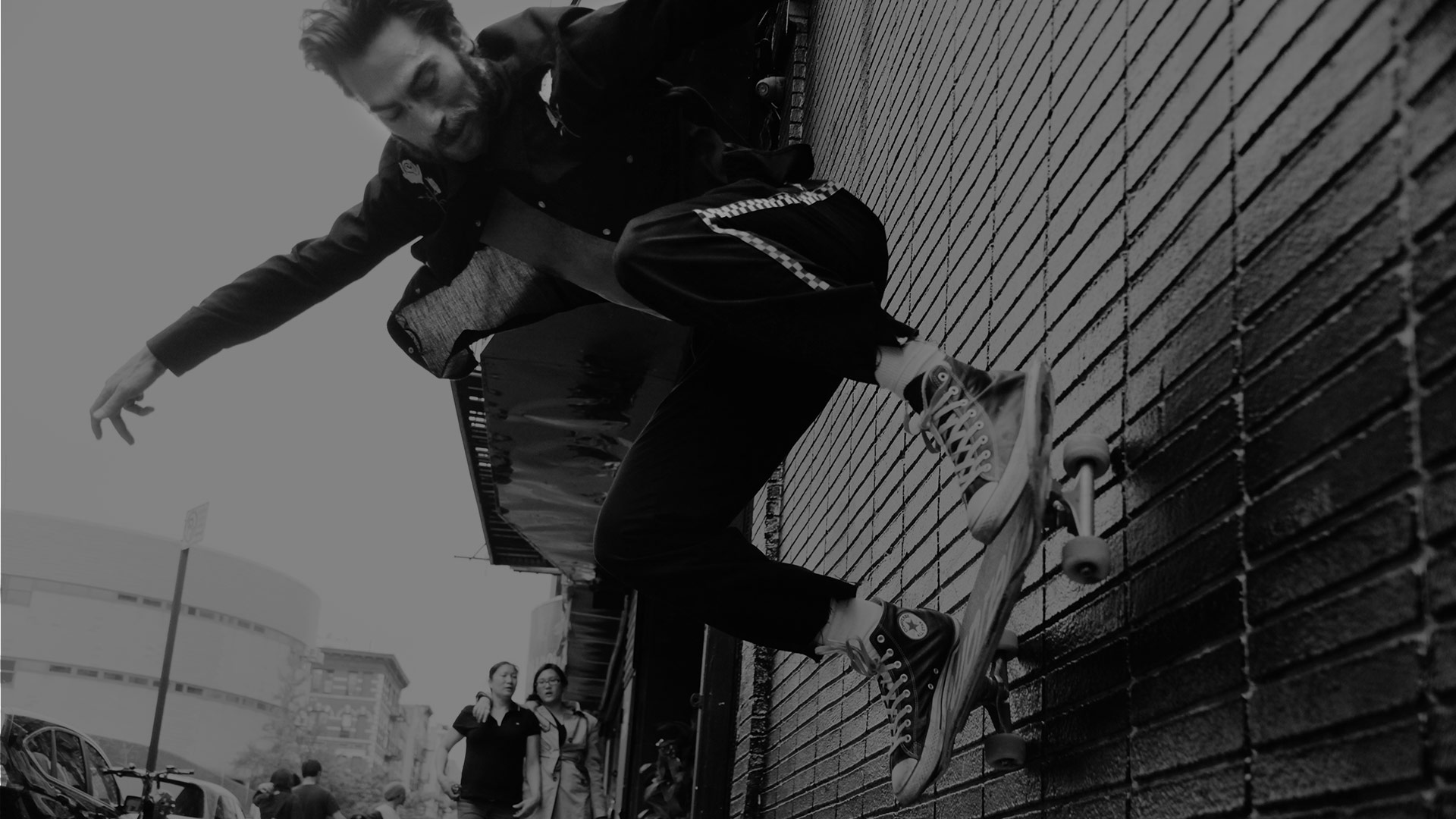
Eli Reed is a professional skateboarder who has as much to offer when he’s off his skateboard as he does when he’s on it. He has become a fixture in the Downtown New York Art, Fashion and Skateboard scene and is also currently spending more time in Los Angeles, taking classes to pursue a new passion: Acting. I met up with him at a park in West Hollywood to conduct this interview” — Chad Muska

Where are you from and where did you grow up?

I was born in Boston, Massachusetts and grew up in Cambridge, Lexington (Where I started Skateboarding) then back to East Boston in my early teens. I eventually moved to New York City.

How did you start Skateboarding?

Some kids in the neighborhood were doing it and my big brother had a skateboard that he got from Maximus (Skateshop in Massachusetts). It was the 90’s and the skateboards were shaped different than they are now. I’ll never forget that— my brother had to draw the shape of the board— to show a street board, not an old school 80’s board—for our mom to get. Skateboarding was just one of those things that picks you. They say when you love something it picks you. So by the time I was eleven or twelve I started to see some magazines and skateboarding videos, and I just knew this is what I wanted to do: I wanted to be pro.

Did you feel you had to go to New York to make it as a professional Skateboarder?

Actually, California was where I wanted to go. When I was twelve years old I won a Vans Warped Tour contest and it automatically qualified me for the next round and they flew me and my mother out to California. She was really excited because she had never been there before. We both started to see that I could do something more with skateboarding, and that there was a chance to make a living at it. I got to see a bunch of pros that I looked up to, like Andrew Reynolds, Ed Templeton and others. I wanted to stay forever, but we had to go back to Boston.

How did you get your big break?

It was a slow start for me. I was a late bloomer. I didn’t turn pro until I was 23. Most of my friends were turning pro around 18 or 19. I was sponsored by my friend’s company in Boston. It was a smaller company and the industry would usually ignore smaller independent brands at that time, so if you wanted to make it as a Professional Skateboarder you had to get a major board sponsor. I eventually got hooked up with a Mountain Dew endorsement through Paul Rodriguez and shortly after that I joined the Zoo York skate team. That was when things really started to happen for me.

What has Skateboarding taught you?

Everything. We started with skateboarding as kids, planted that seed and watched the flower grow. Skateboarding has taught me about friendship, community, precision, strength and every quality that I have. The overall life lesson that I learned from skateboarding is to never give up. You are always going to fall down in life but you can get back up and keep going.

So I hear you’re working on a video project with Converse?

Yeah, been filming for that and also been working on a capsule collection that will drop with it.

What are your feelings on social media?

I’m not that into it, to be honest, I’m just not that type of person. I’ll be on Instagram and make skate edits and stuff on my iPhone because its easy and fun to share, but overall I’m not like a Facebook guy, I’m kind of an old school guy. I prefer face-to-face communication. Like, recently I became single and I have never been on a dating app or website like Tinder, or that other celebrity one. I just walked up to a girl I met recently— it was the day before Valentines Day, so I walked up to her and just asked her if she wanted to be my Valentine.

What do you think about the current interest in skateboarding from the high fashion world?

I think it was really going crazy about a year ago and now it’s slowed down a bit. It’s still there, but every brand out there wanted to have a skateboarder in their advertisements at one point. I ended up doing a Coach commercial and then a Tiffany’s watch commercial. I was just connecting with these brands through word of mouth on the streets, being a skateboarder in NYC. I think it can be executed so right—and amazing—but it has to have the right people doing it. There are a lot of ideas I have that I would like to bring to some major brands.

You also have had a clothing line, self-titled ‘Eli Reed,’ that you designed and ran for the last five years. Tell us where you are at with that now.

I slowed down working on the brand a few moths ago to focus on skateboarding more, and some other projects. I’m not 100% done with it, but I needed a change. I’m still working as a brand though, doing collaborations with other brands like Rochambaue. We are creating some video installations and skate performance art pieces.

Yeah I saw that you walked in the Rochambaue fashion show?

Yeah those are my boys.

What does it mean to you to be an artist?

To wake up every day with an idea and a need to execute that idea. That doesn’t necessarily make you a good artist, but it makes you an artist.

What do you think about the night-life in New York?

It’s just changed so much… I started hanging out in the city when I was 16, underage, sneaking in bars and stuff. Then I came back when I was around 20 or 21, so the past ten years I’ve been in the mix. Its not that I don’t still like some places in Manhattan, but lately I have been hanging in Brooklyn where the people go out to actually dance and have a good time and let loose. I started to get back to listening to some Reggae and my friend took me to a party in Flatbush Brooklyn called Fire Sunday., and it is the illest party in New York!  Reggae dance hall Dj Bobby Konders from Hot 97 spins, and people just get so live! Now I go every Sunday and through that spot I started to discover a bunch of other places closer to my house in Brooklyn. Real Jamaicans and Caribbean people dancing, with their soul. I think just staying in Soho and the LES will kill you. New York is booming with life, there are so many cultures in different directions from Queens to Brooklyn and beyond. There is so much to discover.

Music you’re currently listening to?

Really into Dancehall right now, Vybz Kartel, Busy Signal. And if I’m chilling with my girl I like some Sade, and also been listening to some Leon Bridges.

Places to eat in New York?

I have a lot. That’s what I love to do: Eat! I have to throw Sant Ambroeus in there because they are family and that’s where I met Aleim. Then I have to mention Da Silvano even though they are closed. It was always my favorite. RIP! I was a Da Silvano guy but now I will have to go to Bar Pitti.

So I hear you have been sober for a while now. How is it going out in the scene and not drinking?

Yeah, I’m five years sober. In the beginning it was a little hard because, it’s funny, I was always very social when I drank but when I was out sober I had some social anxiety that I didn’t notice before. I think everybody has some sort of social anxiety and that’s part of the reason why people drink. Getting sober for me was the first step to self awareness. That’s why I like to go to places where things are happening and not just a bar where people are drinking.

What inspires you?

Always woman. As soon as I like, fall in love, boom, my energy is just like… Or if I am skating and see a beautiful girl I will land a trick right then. I am into signs, and Gemini are ruled by love. Women always spark my energy.

Any opinion on world views?

I’m not the best person to ask about this because I think that politics—and so much stuff—is bullshit, so its not that I’m ignorant, but I like to create my own bubble that I live in. I am such an American boy, raised in Boston, but I could see myself moving out of the country and retiring somewhere like Japan. There is an old saying that Politics create Hippies and Hippies create Politics.

So you are taking acting classes?

Yeah, I made the decision last year to heavily pursue acting and its kind of like skating. You have to practice and master the craft. I have done some small commercials and a pilot once, but that was before I started taking classes. I don’t think I will ever love anything as much as skateboarding, but acting has me really excited, like I was when I first started skating.

Now I’m ready to put myself out there. I am starting to learn raw theatre. It’s a whole different ball game. I feel you are not a real actor if you haven’t done theatre. I also feel that acting has already been a conduit to expand myself in different directions, because acting is limitless. To be a good actor you have to be able to be anything from a Tennis player to a Lawyer. I was working on a play, “Orpheus Decending,” and I had to play the guitar, so I learned it while playing the character.

Any other projects you want to mention before we wrap this up?

I have had this idea for a performance art skate piece. I think that skateboarding becomes an art because skateboarders are always conceptualizing something new that doesn’t exist. So I had this idea to invent a skateboard trick and set up cameras in a space and film the process of what goes into learning a trick. The project is called “The pleasure of failure” and it’s all about the process, and watching somebody fail thousands of times before landing the trick. I thought about it in two ways— either go into the space and stay there and lock yourself in there till you land it, and people have to bring you food and stuff, or go in for a few hours a day until you do it. It could take months or years but the idea that any one try could be the one you land is interesting. I was kind of inspired by Vito Acconci and his performance art. It’s all about the idea of falling down thousands of times and still getting up and keep going.

Daring To Claim The Sky

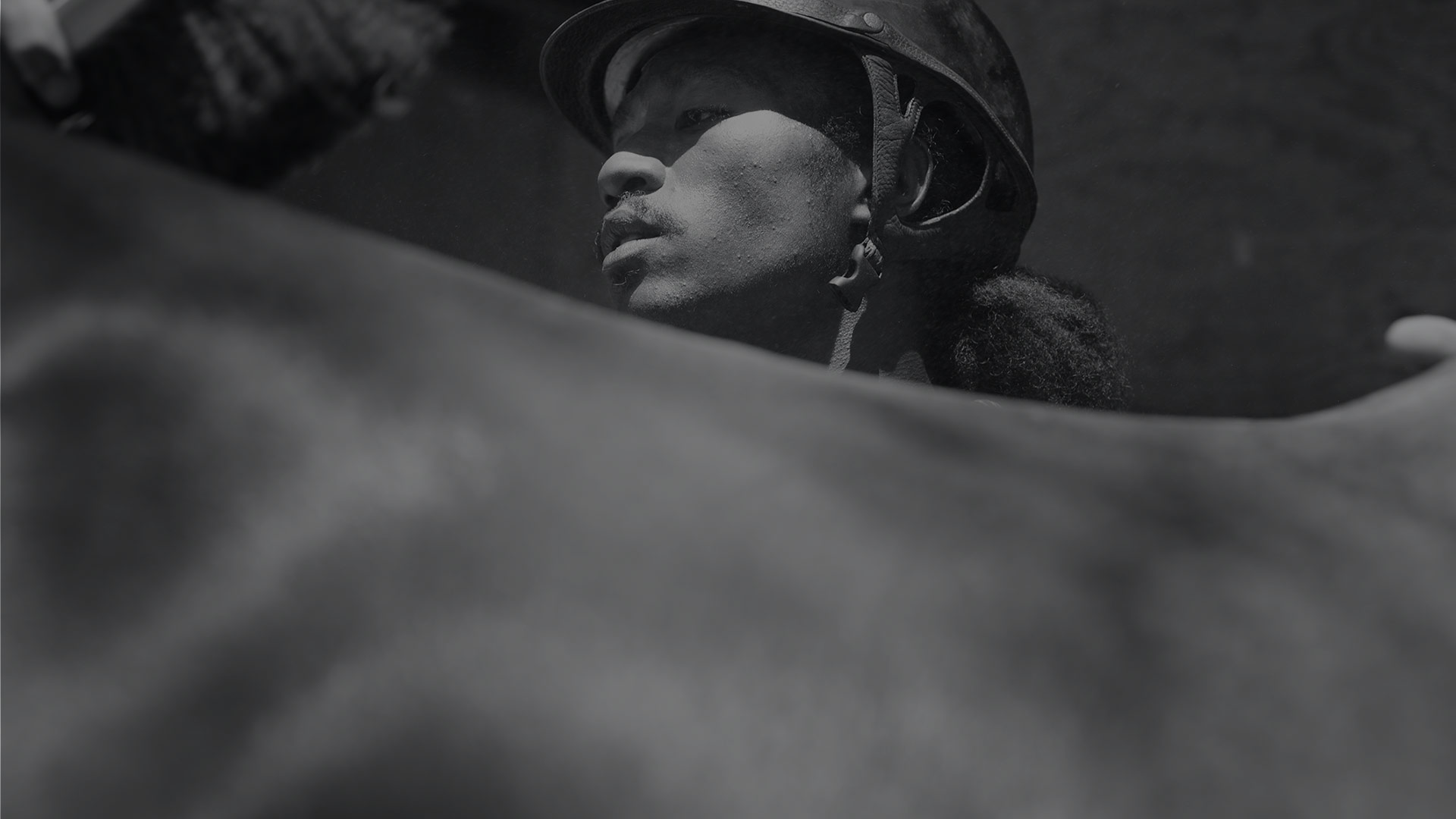
All things start with an idea, a dream, or a vision, and then enters the hard work and elbow grease it takes to make it happen. Thirty years ago, when Mayisha Akbar moved to an agriculturally-zoned area of Compton, California called Richmond Farms, her dream was to raise her kids with horses in their back yard. Soon her small ranch became a safe haven for children around the neighborhood. In 1988, she founded the Compton Junior Posse. Akbar’s mission was simple: Keep kids on horses and off the street. Her dream blossomed into a year-round equestrian program for the inner city and at-risk youth, instilling in them a work ethic, and building the confidence that comes from learning to ride and care for horses.

As a life long horse-lover, I was immediately inspired by the work being done by the Compton Jr Posse when I was introduced to it by Olympic gold medalist show jumper Will Simpson, who regularly volunteers to train the kids there. I wanted to record and capture this unique moment in time, so I contacted a friend and photographer Melodie McDaniel and shared my idea of following and documenting the organization for a few years. Melodie’s work is iconic, saturated with depth and understanding. She has a knack for capturing compelling stories and telling those stories with the dignity becoming part of the community that she is documenting. For almost three years Melodie immersed herself into life with the Compton Jr. Posse. The results; friendships blossomed and trust was built. Both are visible in her portraits and powerful reportage. The enormity and importance of what these animals bring to the children in the program live in every photograph.

The children appear comfortable and at ease with their horses, whether on the streets of Compton or in the show ring the focus and strength exuding from each portrait is palpable.

Amelia Fleetwood: Mel, what was your initial attraction to this project? I remember the phone call because I had drunk way too much coffee and was totally over-amped.

Melodie McDaniel: I knew right away that this was the project, the gem I was always looking for as a photographer. The core of my work involves capturing diverse subcultures, particularly ones that don’t get much attention. This was a unique and special story about African American culture set in Compton; no one really knows about horse riding in Compton! I was also attracted by these underprivileged African American kids learning and thriving in a sport so often dominated by the elite.

AF: I knew you would be the perfect person for this exploration, to witness the children’s transformation as they master the riding.

MM: Yes, it does so much for these kids, teaching them self esteem, confidence; horses are so positive, this training goes such a long way!

AF: Can you explain why in your work you are always brought back to this place of exploring diversity?

MM: My underlying attraction to diversity is because of my upbringing and background. My mother was Jewish and my father African-American. I grew up in Los Angeles. After I left high school, my mother sent me to live in Israel on a kibbutz for a year. I wasn’t thrilled, the Middle East in the mid-1980s was not somewhere I wanted to go. But I got inspired, meeting people from all over the world and learning about diverse cultures, and I saw photography as a way to continue doing just that. When I came home I knew what I wanted to do. I honed my skills at Art Center College of Design and then was let loose on the world.

AF: Boast a little, please …..

MM: As a photographer and director for the last 19 years, I’ve always been driven by my interest in narrative and storytelling. My biggest music video was for Madonna and these days I love working for Miller Genuine Draft, Levis, and Facebook, to name a few.

AF: And now…

MM: And now we’re about to open “Daring to Claim the Sky” our show, with about 30 beautiful black and white photographs representing the work I have created over these last few years.

AF: Explain how following this program has touched your life

MM: Meeting the kids from CJP and having the chance to document their progression was a gift. I feel such gratitude for this opportunity because the energy behind my work in this project has really re-invigorated and reignited the passion I have for my work. I too have been given the chance to fly!

Arielle Holmes

As I think back on it, these photographs feel like the resultant data set from a strange particle collision: an of-the-moment indie actress trying on wigs, posing as the sun set on a bluff in Malibu. The photographer’s entourage: a shaggy dog and two daughters playing house in a vintage Volkswagen camper; the stylist, the makeup person and Aleim, doing their best to finish the shoot. And me, carelessly rolling the ISO dial up as twilight took over, feeling that strange sensation of being in a dream. One that would not be out of place if Fellini had made a movie about Los Angeles. To reach this conclusion, the day necessarily had to start on similarly what the fuck footing. Miles and world’s away in Koreatown.

Arielle Holmes is a gifted storyteller. And the stories she told on the drive to Malibu gave good reason as to her success as an actress. I would say author as well, but the manuscript that would form the backbone to her breakout hit, Heaven Knows What, as far as I can tell, was never published. For a film where the lead cast member did heroin on-screen, the good intentions of rehab and a promised published work retrospectively appear as an attempt at balancing the scales. Heaven gave way to American Honey, another critical and festival hit but much smaller role, which gave way to photoshoots like this one which gave way to who knows what.

One particular story involved the tale of living in a run-down building with her boyfriend at the time. “Up to the knees the place would flood sometimes,” she told us, adding that the worst part were the rats that they could feel scurrying about inside their mattress. After that story, she continued into her current situation with her boyfriend and plans for acting. It was the kind of rote shit you tell relatives at Thanksgiving. Sometime after this, she passed out in the passenger seat. It was now late in the afternoon and we were racing on the 101 to get to Malibu. The shoot was scheduled to begin at noon. We had waited for three hours in front of Ms. Holme’s apartment for her. Phone calls to her manager and friend yielded nothing. She came down briefly, before mentioning she needed to get something in the apartment. Another hour passed by before she returned so we could get on our way. Her manager said she told him that she was embarrassed by the extensions in her hair. Passing by the Capitol Records building I remember her mentioning she had once been an opera singer.

In front of the camera, she was the perfect subject for Ms. Gearon: pure, innocent, vulnerable and childlike. It became easy to see why so many, particularly filmmakers, had fallen under Ms Holme’s charms. Among certain filmmakers, there’s this kind of heavy adoration for non-actors, especially those whose authenticity is not bothered by a camera, crew and all the trimmings. It’s representative of that tug-of-war between a medium that captures reality and the way it’s manipulated to tell stories. As if, somehow real is better. There is no such reality in these photos. Just the strange captured light of a circus. And an underlying sadness that I admit, may come from having been there. And one last memory from the day.

Through surface checks on the internet, Ms Holmes has no projects coming out or in the works. Her book has yet to be published. So where is she? I remember a chorus of that question on the day of the shoot as well. We found her passed out in the bathroom.

El Chocolatito

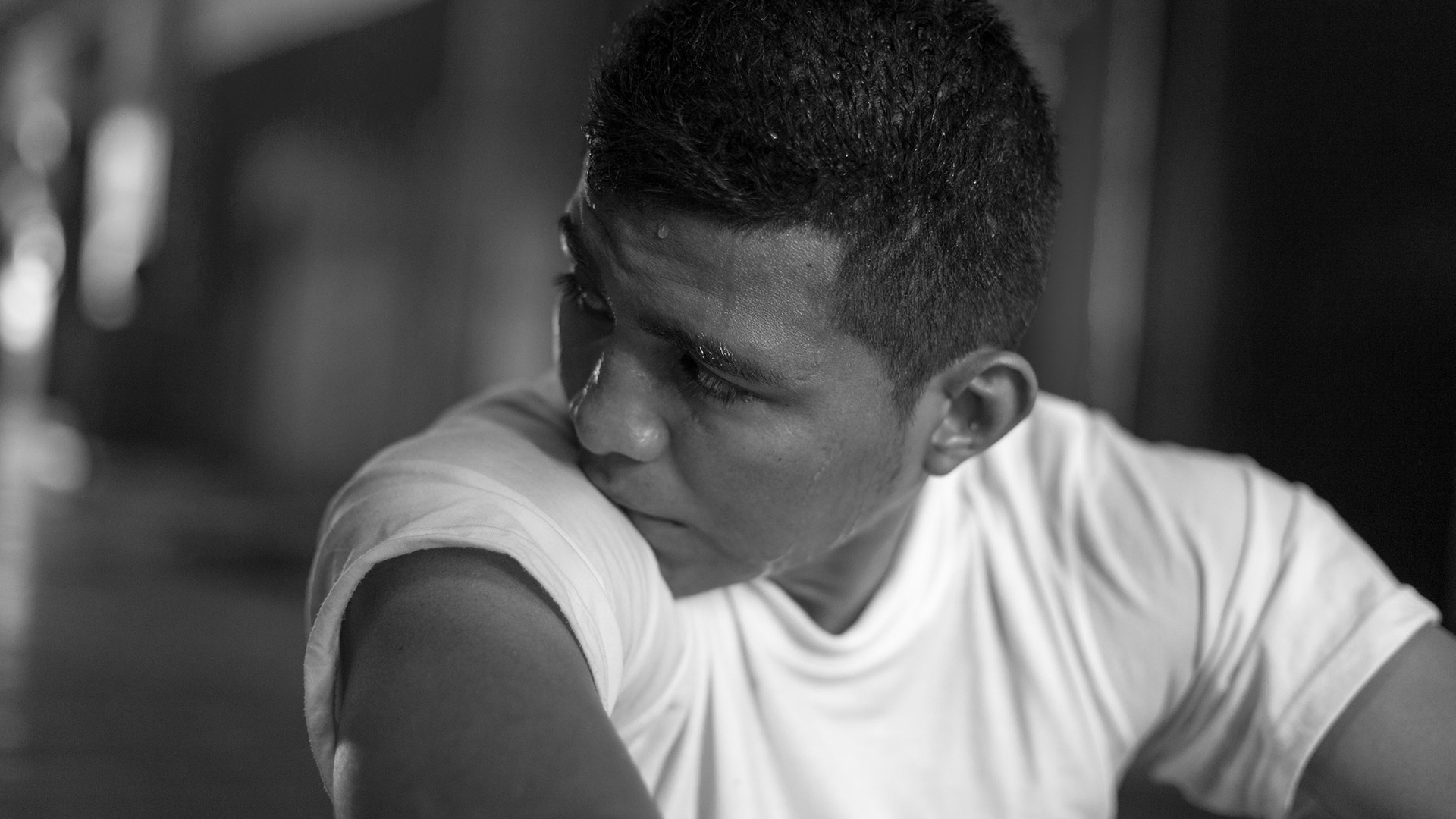
Román “Chocolatito” González embodies the paradox of a beautiful and punishing sport. 5’3”, 114 pounds, with a voice that purrs Spanish. Roaring predatory skill inside the ring. 47 wins. Two losses.

Once considered to be the world’s greatest pound-for-pound fighter, he suffered a controversial first defeat during an incredible March 2017 battle at Madison Square Garden and a subsequent crushing knockout loss to the same fighter six months later. Boxing pundits telegraphed his demise during the year-long hiatus to-follow. But with a clear head and a recent high-profile knockout win, he’s back chasing another championship belt.

When we met, Román brandished his fist only for a friendly bump over our mutual love of futbol — the one sport he admits to enjoying besides the “sweet science” that defines him. He followed his father Luis into boxing, turning pro at 18, to fight his way out of the proverbial corner and pull his family from poverty. At age 31, Román has done that successfully. 39 knockouts have earned him championships in four different weight classes through the years, and he joined his late mentor and former trainer, Alexis Arguello as one of only two Nicaraguans to hold belts in at least three weight classes.  

Luis, whose nickname “Chocolate” birthed the derivative, sweet moniker of his son, leads his training team. Arnulfo Obando, his previous trainer passed away at age 53, just months before the Costa Rica pre-fight training camp that preceded his first loss (“very difficult” Román admits).

Training camps are a long-standing tradition in the sport, giving fighters an opportunity to retreat from the spotlight’s distractions, sharpen skills, and nurture spiritual well-being. The latter is particularly relevant for Román, who believes strongly in himself, but often speaks of his reliance on a higher power.

“First and foremost, God is where I go to get that strength,” he said when asked about his pre-fight mindset.

Speaking to Román about preparation also highlights some unique intricacies of the boxer’s mentality. Athletes in most other sports compete nearly daily or weekly. A bad day yields a loss, but also an immediate opportunity to get back on the field to address and correct it. Kobe Bryant once famously left Staples Center after a season-ending litany of misfires and went directly to  Palisades Charter’s gym to shoot jump shots all night.

But in professional boxing, there is extensive preparation, followed by a singular massive crescendo and a long period of rest. Fighters hope to heal and then wait for another opponent — another payday. The do-or-die rawness of this “all-in” scenario is equally frightening and fascinating.

On the day before a bout, I asked him about this: How do you calm yourself down? Do you feel at peace today?  

“What helps me to regroup is knowing that I’ve trained,” he responded. “I feel calm because I feel I’ve put in the work.”

Despite the pressure of fighting in front of massive crowds and chasing the sport’s giants, he does genuinely exude this tranquility. Román steps into a ring in peak condition, knowing his capabilities and prepared to fight for the pride of his mentors, family, and country. The actions he takes are in his capable gloved hands. The results are in God’s.

Román also tells me about the moments in the arena tunnel before he fights — where privacy and quiet prevail one final time before he’s met with a deafening wall of spectator noise on the way to the ring.

“You’ve gotten where you wanted,” is the message he relays to himself. “The fight that you’ve been thinking about is here, so go and get it.”

There is a directness in his answers, revealing the simplicity of his approach. His Instagram feed (@chocolatito87) bears the charming smile of a champion, but Román doesn’t rely on the requisite maxed-out bravado of the typical pro-fighter-cum-showman. He says he prefers to respect the other fighter and the sport, setting a good example for the kids that follow him. It makes sense coming from a once-shy, impoverished kid, who found empowerment in his own furious hands.

In the aforementioned first upset loss, Román was undone by a nasty, penalized hit which yielded a gushing cut above his eye, impairing his vision increasingly throughout the fight. Despite all of his preparation, landing 150+ more punches than his opponent and winning the fight by most accounts, the night wasn’t his. Neither, any longer, are the belt and flawless record. But his September 2018 comeback win was as fast and sweet as the losses were brutal. He wants to ride that victory momentum and be back in the ring soon.

In reflecting on his career, Román once told me that he never imagined he would be where he is now, but all the praise and accolades are just bigger motivation to keep going. He says he’s carrying on his late trainer’s legacy of discipline — sticking with it. His challenges serve as new motivation to keep his faith and move forward.  Photos showcasing the humble grin and sweat of a man feeling blessed once again flood his social media feeds. Light on talk but born for the fight, Román “Chocolatito” González is ready once again to run out into that rising roar of sound, those flashing lights on the other end of the tunnel.

Christina Seilern

For some artists, there’s greatness in accommodation, in being a chameleon, not an auteur. Architect Christina Seilern is concerned neither with a pre-conceived aesthetic nor producing “radical” architecture. Rather, she aims to build what she calls “good architecture”, which reaches to the essence of the problem and adapts to the specificities of different locations, cultures and patrons. In this way, every project becomes a moment of discovery, where an idea is allowed to mature and to take its own path. Seilern has an international background and launched her own flourishing practice in London ten years ago, tackling a wide array of projects in various countries. She has built private residences, restaurants, theaters and mixed-used complexes in extremely different sites, ranging from mountain slopes to the African wilderness through historical cities, successful thanks to a flexible approach.

Can you tell us something about the path that led to where you stand professionally?

I was born in Switzerland. I lived there till I was eighteen. I went to America to study science. In Boston the shift of scale was awe-inspiring and I decided to give architecture a try. My very first class was the beginning of my architectural love.

I was at Wellesley and MIT for four years as an undergraduate, then I spent one year in Paris. It was during the recession in 1992. There were no jobs in architecture. I was in banking and realized it wasn’t for me. I went to Columbia University to do a master’s degree.

During my studies at Columbia I went to a lecture held by [architect] Rafael Vinaly. Although it was the period when deconstruction was fashionable, he talked about the Tokyo forum and in particular about one detail. I was struck by his love of craftsmanship. I worked for him in New York. A few years later I went to see him to tell him that I was going to leave my job because I wanted to move to London. Rafael’s reaction was: “let’s set up an office in London”.

That sounds amazing, was it not unusual for somebody as young as you were at the time to receive a proposal like that?

I was twenty-nine, which, in architecture, is like being in kindergarten. But Rafael is very impulsive.  We worked very well together. He had always wanted to set up something in Europe. It was completely unplanned. I was at a very early stage, and I did not know anyone in London. Something like what Rafael asked me to do forces you to go beyond what you expect you can do.

It must have been quite a challenge…

Yes, it was. Luckily two weeks after I accepted Rafael’s offer he got a job in Europe.  It was serendipity, everything fell together. Yet we still had to break a market: London is a village in terms of its architectural community. We pitched for a performing arts center in Leicester. The only way to present ourselves was to come forth as the odd ones out. We argued that all the architectural firms involved in the competition could manage a project, but what distinguished us was how we responded to the client’s brief. We made it.

Was leaving a large practice to set up your own studio yet another challenge?

People thought I should do interior design. At first it was difficult to get projects and to hire staff. It took us some time, but now we are getting interesting projects and excellent people apply to work here. It feels like we are breaking into the larger projects. We have been approached by the developer of a Swiss ski resort. We are doing two restaurants for him. Now we have also been asked to conceive a concert hall for the same resort.

I suppose your breakthrough assignment was the house in East Africa for which you received various prizes, including a RIBA award?

Yes, it was a great opportunity. The client had ambition. He wanted to make a mark in the country where he was building his home, he wanted to show he was there to stay, he wanted to give the locals a sense of stability. It was not just about getting a nice house. He asked: “how can we make a piece of architecture?”. In order to do very good architecture you need to have the client on your side.

This African house has been compared to Frank Lloyd Wright’s  Fallingwater…

I never thought of this till I read about it. It all started with the location: a rock, breath-taking views and a dam below with reflections. The cantilivered roofs were conceived to create a space to live outside being protected from the sun. They also frame the views and take your eye out to the horizon. We aimed at creating a floating structure, embodying the notion of unstable equilibrium, like a dancer on her toes, to convey the idea of lightness. It was the opposite of [Norman] Foster expressing structure. We wanted to make the building light and hovering. It happens through various details: for instance one can’t tell how the roofs sit on the ground, we hid columns. The winter living areas at the upper level are set within transparent enclosures that underscore the sense of living immersed in the surrounding landscape. A small infinity pool creates a visual link between the dam reservoir and the lower levels of the house.

Which other projects have been propelling your reputation?

One important project that we have been working on for the last eight years is in Lithuania. We are dealing with a large historical complex. It was a palace, a monastery, then a hospital in Soviet times. After the break-up of the Soviet Union the building was abandoned. Three brothers moved there in the 1990s, established a successful business and purchased the site to redevelop it. The planning system was very young in Lithuania, a politically young country. This proved to be a great opportunity.

We set about to learn about the existing planning regulations and were then able to discuss them with the local authorities, who were willing to question them and to adapt them to suit our projects. We convinced them that we had to do new structures for the lifts, that one did not want to mimic the Baroque style of the historical complex, because it would kill the composition. We viewed our additions not as extensions, but as carefully balanced insertions, evoking rather than replicating the historical fabric. We proposed reflective structures, with these additions clad in highly polished stainless steel. The new buildings blend into their surroundings through this reflective quality.

Another concern was the requirement to insert skylights in the tiled roofs. These openings would kill the Baroque look. So we built a metal lattice that appears like a red solid roof: from the outside the original Baroque composition remains intact. The planners found this a radical idea and asked to see a mock-up. Persuading them was a great victory.

Now we are building a new auditorium for Wellington College in the English countryside. We aimed to build a bridge between the college and the landscape behind. Wellington has a historical campus with listed Victorian buildings. We chose a round structure, constantly receding into its landscape, which therefore is not imposing. Moreover, if you think of round arenas, it is about the community, about connecting audiences. The walls are made of charred wood, an eco-friendly material based on a completely natural process. It also has the aesthetic advantage of giving the impression that the building arises out of the surrounding woods. Attached to the auditorium we placed a space filled with natural light that will serve as a “cultural living room”.

Your practice is currently working on a variety of projects, it also has a management side, how do you keep on top of everything?

I have a managing director and a senior architect who understands how to supervise project architects. This allows me to concentrate on the design and on how we think about architecture. I have written a book and I am giving lectures in order to convey this thinking.

Thank you very much for this interview. It was exciting to hear about your professional path and about your creations: as you state in the introduction to the book that celebrates the first ten years of your studio, these are truly buildings with a soul, rooted as they are in the contexts that they inhabit.

Hugo McCloud

“I use beauty and attractiveness, materials and process, to grab a person’s attention, but at the same time there is real substance to each process,” says the artist Hugo McCloud in his airy and orderly Bushwick studio. The artist works simultaneously on multiple pieces, and today his large-scale abstract paintings line the studio walls while works-in-progress are arranged on the floor and tables. Several different series, and the tools to create them, are on display, a testament to how quickly McCloud is reacting to his own work, and moving his practice forward. There are boxes of hand carved wooden stamps, hanging polyethylene bags from various countries, and paintings that have been hammered, stamped, flamed and, in certain cases, covered with aluminum foil.

The artist comes from an industrial design background, so it is perhaps not surprising that process is central to his work. Describing the importance of using everyday materials and transforming them into objects of beauty, he explains: “Why would you put tar paper, or aluminum foil, on your walls? I’m using materials that you wouldn’t usually see manipulated to be attractive. And that is what my work is really about, finding the balance between what is raw, undesired and desired – a place where most people are uncomfortable – and then mixing materials and making it a very comfortable place to be.”

McCloud’s early fine art explorations began with copper and brass, using oxidation and rust to patina his pieces, a process he was familiar with through designing and constructing objects in his fabrication workshop. He has since adopted roofing paper as a canvas, applying adhesive, liquid tar and paint, so that the surface is thickly textured. McCloud describes “building” his paintings, rather than “painting” them, and he admits that he has only recently started using brushes, having previously been more comfortable applying paint with industrial tools.

The articulate, compelling artist and his artwork have received a great deal of attention over the past few years, and his well-publicized show at Sean Kelly Gallery in late 2016 was fully sold out. It was his second solo exhibition at the gallery, and was titled Veiled in reference to a group of new paintings that he covered with layers of aluminum foil. The foil obscures the underlying paint, so the viewer can only see the densely painted texture beneath the shiny, reflective material. McCloud’s rapid success in the art world is unusual, especially because he did not come through traditional art school channels, but his gallerist partially attributes this to his success. “He didn’t learn the theory, the conceptual underpinning, and I would say this allows him to intuitively pursue his medium through the material in ways that other artists might not.” Kelly continues, “I think the fact that he didn’t have boundaries and precepts set for him has enabled him to be very intuitive and very reactive. He’s reacting to the work itself and moving at a phenomenal rate.”

McCloud is very conscious of his desire to continue innovating. “When I did [the veiled pieces], I already had an idea of the next place I wanted to be.” Says McCloud. “Sometimes it’s hard for me to stay in one place. When I create a piece, I am continually searching for something more. I am continually looking for that new place.”

This in the moment feeling, and McCloud’s hands on approach, is enforced by his extensive international travel to countries including the Philippines, Mexico, Morocco and India. Observing, and more importantly, participating in local art practices and culture, the artist emphasizes that he is “learning through doing.” Helping to define his artistic practice as he explores different materials and processes, including wood block stamping, weaving and carving, these travels function as mini-residencies. Last fall, he spent almost three months at the Bellas Artes Projects in the Philippines, working alongside local artists to learn wood carving and resin techniques. He then employed these hand carved stamps in his paintings. While some designs are inspired by his travel experiences, he has also copied discarded furniture patterns found on the streets surrounding his studio, carving the designs into stamps he then imprints on paintings. McCloud’s focus on process is evident throughout his practice, but it also seeps through to how he lives his life, placing an emphasis on his personal experience and exploration.

McCloud’s recent gallery exhibition also featured new works made from strips of reclaimed polyethylene bags found while scouring local trash heaps in the different countries he has visited. McCloud points out that wherever he has traveled, these bags have the same trajectory, being used to store and transport material – often stamped and branded with a company name – then eventually discarded and recycled by waste pickers. Recovering these bags during his travels and returning them to his studio, he envisions a future show comprised of works made from the bags taken from various countries. Exhibiting them side by side would emphasize the broad commonality of the product and its use, but also highlight their subtle differences.

Understanding how things are made and built, and how similar processes can be accomplished in various ways, is important to McCloud. He comes from a family of “makers” his mother was a landscape designer and his father a sculptor, and he has internalized this legacy. “It is always interesting to see the same things being done, and how they are just done differently.” He says. “The way a building is built in India or South Africa is totally different, but the building is still a building. So it’s the idea of understanding how the same thing you do in your environment is done somewhere else though a different process.” This interest in commonality of material and experience, through different methods and cultures, seems to inform much of his approach. His desire to unite disparate materials and cultural practices in order to create successful art work is at the center of many of his processes.

The afternoon I visited his studio, McCloud was finishing a painting, and adding a new step to his veiled painting technique. Working from an image created in Photoshop, he was painstakingly cutting out strips from the sheets of aluminum foil applied to the painting’s surface. Removing the foil strips, the underlying paint is visible, revealing broad strokes of color. As with all his series, the handmade element of the work is plainly evident, both the veiling with aluminum foil, and then the cut-out strips. This new step progresses in a manner that is logical, both visually and conceptually. Once he has finished removing the strips, McCloud and his assistant hang the fresh painting for us to view on the studio wall, and it is striking how the strokes of the removed foil read as brushstrokes themselves – almost as if the artist who has only recently begun using paintbrushes – is becoming unveiled.

Los Angeles Palms

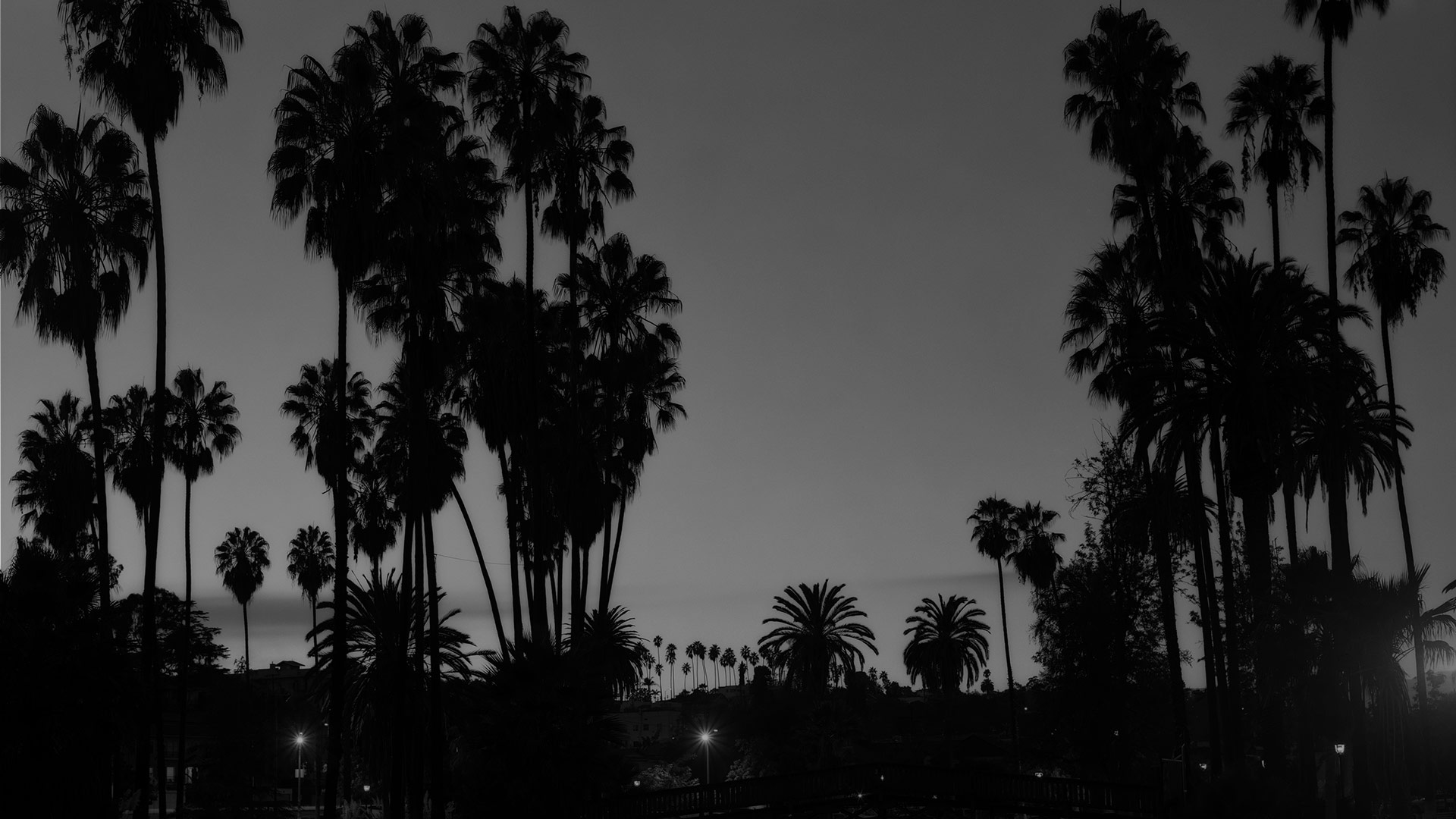
The project Los Angeles Palms (2017) portrays the life and influence of the exotic palm tree species Washingtonia Robusta.  ‘Ask anyone—native Angelino, recent transplant, or casual visitor—for their image of Los Angeles and you will hear the usual list: surf, sand, and palm tree-lined boulevards marked by the rise and fall of celebrities, shaped and clogged by the automobile, wreaked by repeated racial strife, menaced by impending natural disaster. Through more than a century of exposure through literature, cinema, and media these images insinuated themselves in the imagination. Of all of these clichés, however, the palm tree is the most easily distilled into a single frame, deployable whenever necessary to establish that the action takes place in Los Angeles and if the city lacks an architectural skyline—not a single downtown skyscraper has managed to burn itself into the collective unconscious—its rows of palm trees substitute.

Considering that the average lifespan of the Washingtonia Robusta ( Mexican Fan Palm) is seventy to a hundred years and that most of the palms visible now were imported and planted to beautify the city for the 1932 Olympics, the bulk of Los Angeles’s palm trees will disappear within a decade or two. Regardless of its link to the city’s popular image, the palm has never been the city’s official tree.’

All images of Los Angeles Palms are made on a Crown Graphic Field camera on Fuji 4×5 inch polaroids and 4×5 inch Kodak 160 negative-film between 5 AM and 7 AM.

The following is an excerpt from Marie-Josè Jongerius’s book, “Los Angeles Palms” written by Jared Farmer. (Fw: Books Amsterdam. January 2017):

In the postwar era, sidewalk palms grew into symbols of urban Los Angeles. Tall ranks of Mexican fan palm became familiar fixtures on the horizon, generic landmarks, the original skyscrapers of the horizontal metropolis. The entertainment industry magnified its stature. Advertisements, telecasts, television shows, movies, song recordings, and music videos produced in Southern California made ready use of street palm imagery. A telephoto shot of a row of lanky palms became shorthand for L.A.—America’s dream factory, the most filmed locale in the world. Long after the city’s street tree division gave preference to other species and genera, private developers, architects, and landscape designers utilized Mexican fan palms for the mass communication of desirability. The “L.A. look” transcended Los Angeles: shopping malls, gated communities, and casinos in places such as Orange County and Las Vegas mimicked and exaggerated the fashion for high-rise fronds. Ultimately, fan palms meant less to Angelenos than to outsiders and their idea of L.A. In 2006, when the City of Los Angeles officially discouraged fan palms as street trees, the world reacted in disbelief. People could not imagine “SoCal” without the shabby-chic Mexican fan palm. Even in San Francisco, a city with a distinctive palm history, the image of L.A. now affects the way that people interpret an urban plant with fronds. “Fashions in trees change year by year like styles in women’s dress,” remarked a Los Angeles Times writer in 1942. According to him, the rage for palms had subsided.

The tropical trees didn’t match the architectural styles of the day, English manor houses and Cape Cod cottages. “The present trend is away from the bizarre and exotic.” During the serious times of World War II, Angelenos even worried about dangers posed by palms. Very few of the tens of thousands of street palms planted in previous decades had ever been trimmed. The dried-up fronds formed thick mats of flammable material, a stockpile of fuel that conceivably might have been eyed by the Japanese for the incendiary attack. In 1942 hundreds of residents petitioned the city council to ameliorate this public safety hazard. Many petitioners felt angry that the board of park commissioners had ordered residential “owners” of municipal street palms to remove dead fronds. This job required special training and equipment; for novices, it would be “fraught with danger and hazard to life and limb.” The city attorney later advised the board that it had overreached its authority.

In the immediate postwar era, Southland planners and builders eschewed trees like Canary Island date palms and Mexican fan palms. In a time of mass-produced small lots, these large-form trees didn’t seem to fit. “Several decades ago as Los Angeles was developing its suburbs there was a vogue for lining the streets with long rows of evenly spaced palms or dotting front lawns with sentinels,” explained a garden writer for the Times in 1953. As these palms grew higher and higher, they fell out of favor; “we realized they were grotesque and lonely.” She advised home landscapers to use modest-sized varieties such as windmill palm and to set them in groups, thus avoiding the lollipop effect. The developers of Lakewood, an instant suburban city of 70,000 people in ranch houses, the western equivalent to Levittown, Long Island, didn’t use any palms. Lakewood’s list of approved species instead included throwbacks such as pepper trees and acacias. Prefab communities designed for veterans—and reserved for whites according to racially restrictive covenants—popped up like dandelions in the San Gabriel Valley and Orange County. Walnut and avocado orchards around Whittier fell before the bulldozer.

Within the boundaries of the City of Los Angeles, the development frontier shifted to the San Fernando Valley, where developers tore out citrus orchards and their eucalyptic windbreaks. The succeeding residential landscapes of “the Valley” contained many broad-leafed trees and few palms. The trendiest plant of the 1950s and 1960s in Southern California was the “rubber tree” (Ficus elastica), with its striking aerial and buttress roots. (Cities would later tear out ficus en masse because of sidewalk buckling.) When Walt Disney opened the gates of Disneyland in 1955, visitors streamed through Main Street, U.S.A., an idealization of a (white) Midwestern small town. The deciduous trees on Main Street looked modest and conventional, not Californian. The only section of Disneyland with conspicuous palms was Adventureland, home of the Jungle Cruise.

Even as landscapers downplayed palms on the new suburban streets of Greater Los Angeles, tourism promoters played them up the same old way. The All-Year Club continued its long tradition of wintertime “sunshine ads” in cold states. Predictably, these newspaper spots portrayed Los Angeles as an ideal winter destination, a region of oranges and palms. The advent of color television aided the cause. On 1 January 1954, NBC inaugurated coast-to-coast color broadcasting with coverage of the Tournament of Roses Parade, the floral procession in Pasadena that began on palm-lined Orange Grove Boulevard. The contemporaneous advent of passenger flights also aided the cause. In 1953 the Los Angeles Junior Chamber of Commerce welcomed service to and from Boston with the donation of a potted palm to Logan Airport. Around 1960 United Airlines advertised its service to Los Angeles with eye-grabbing posters showing fan palms backing a blond beauty in a bathing suit with shadows of fronds on her bosom.

Despite the energetic advertising, the image of L.A. as a sunny lotus land dimmed a bit in the mid-twentieth century. The 1965 riots in Watts, widely described as a “ghetto with palms,” gave a long-lasting bad name to a swath of the metropolis: South Central. The whole basin’s reputation for smog replaced its former reputation for healthy air. The vaunted freeway system, which seemed like Utopia when construction began in the 1940s, was as early as the 1960s derided as the “biggest parking lot in the world” (a quip often attributed to the comedian Bob Hope). Meanwhile, rival destinations beckoned with winter warmth and palms. The same airlines that made winter vacationing in Los Angeles more convenient opened up competition. Chicagoans and New Yorkers could now visit south Florida or the Caribbean with unprecedented ease. The Sunshine State aggressively courted and successfully captured much of the eastern market for winter tourism. Of America’s cities, only Miami Beach could match Los Angeles in its symbolic identification with palm trees. “Let me tell you, to me when I came here the first time, I had a feeling that I had come to Paradise,” recalled Isaac Bashevis Singer about Miami. “First of all, the palm trees.” Coconut-rich Honolulu joined the contest for tourists in 1959, when Hawaii became the fiftieth state and Boeing introduced the 707.

Even hot desert environments competed with Mediterranean L.A. for snowbirds, vacationers, and retirees. Most famously, the Del Webb corporation turned an expanse of saguaro cactus into the first master-planned retirement community, an age-restricted, self-contained complex with golf courses, shopping malls, medical facilities—and absolutely no schools and associated taxes. The original Sun City, located north of Phoenix, Arizona, opened in 1960 and became the template for many other leisure communities, including one in Riverside County. For Del Webb, palms became a trademark landscape element. At Scottsdale, Arizona, Las Vegas, Nevada, and the latest “playground of the stars,” Palm Springs, California, leisure developers relied heavily on outdoor palms—and indoor air conditioning—to create an idealized environment. In the restructured geography of the postwar Sunbelt, the palms of Los Angeles, and especially Catalina Island, seemed less special and alluring than before.

Greater Los Angeles thrived nonetheless because it attracted so many workers. In the 1950s the metro area, which now included scores of municipalities, entered another long boom, more or less coincident with the Cold War, and transformed its identity yet again. Now, in addition to entertainment, oil, transport, and light manufacturing, boosters emphasized aerospace. Thanks to defense contracts, the GDP of Los Angeles County eclipsed that of many small countries. Area labs and factories designed and produced an awesome arsenal of fighters, bombers, missiles, and rocket boosters. Dozens of high-tech companies started, expanded, or relocated here, where a mighty river of defense appropriations disgorged.

The city continued to expand horizontally, engulfing the remaining open spaces, citrus ranches, horse pastures, dairy farms, and low- density neighborhoods. After Los Angeles lured the Dodgers away from Brooklyn in 1957, it facilitated the depopulation of Chávez Ravine, a semirural barrio in the Elysian Hills that had earlier been slated for a federal housing project. Developers razed the homes and gardens of evicted Mexican residents, terraformed the ravine into a platform, and built Dodger Stadium (1962) at the center of an Olympian parking lot. Obligatory groupings of mature fan palms lined the outfield pavilions. Although the Dodgers’ new home overlooked downtown, there was no easy way to get there. Chávez Ravine had been chosen for its proximity to several freeways, not its proximity to the city center. Downtown Los Angeles declined to near irrelevancy after the electric trolley system, the interurban Red Cars and then the municipal Yellow Cars, suspended operation in the early 1960s.

The dealings of General Motors contributed to the shutdown—the subject of a congressional investigation, conspiracy theories, and the film Who Killed Roger Rabbit? (1988)—but the consumer choices of city residents did so even more. As early as 1910 Los Angeles boasted the highest per capita car ownership in the world. The freeway system built in the 1940s and 1950s cemented the new order. In a sign of the times, downtown sacrificed the tree cover at Pershing Square to ease the construction of what was, on opening day in 1952, the nation’s largest underground parking structure. The relandscaped park consisted of a lawn lined with palms—a “see-through, walk-through park” where the LAPD could easily curtail political rallies, drug deals, and gay encounters. Palms facilitated urban surveillance.

In the early jet age, palm trees often took expressly architectural forms. While residential landscapers turned away from fronds, commercial designers and high-end architects embraced them. Throughout the metropolis, corporate draftsmen used palms as elements in their drawings, models, and finished projects. Aerospace firms such as North American Aviation built clean-lined modernist buildings with palms as accents. It became standard to group the logo like trees in twos or threes, often at angles crossing each other, even bracketed to the sides of buildings. This accessorizing effect could be seen at drive-in theaters and car washes as well as corporate headquarters such as the Capitol Records Tower (1955), high-end accommodations such as the Hotel Statler (1952) and the Beverly Hills Hilton (1955), and government buildings such as the Parker Center (1955), the new home of the LAPD. Architects even designed portico and awning holes to allow sidewalk palms to intersect buildings. In Palm Springs, some of America’s best modernist architects built homes for L.A.’s jet set and incorporated palms and native rocks into their designs. A California fan palm growing out of a trellis that enclosed and sheltered a free-form pool became a familiar design leitmotif at the desert resort.

Plants such as these did not belong to the garden, the seaside, or even the street. They grew out of architecture. The idea was to complement the beauty of concrete and glass, not hide its ugliness. In Los Angeles, building designers placed mature palms close to tall exterior walls so they would cast interesting shadows throughout the day. Select parts of the city—notably Wilshire Boulevard—went vertical in the fifties, adding multistory office towers and apartments (but no more public housing units, a “socialist” proposal defeated by voters). Vertical is relative: from 1905 to 1957, the city enforced a height restriction of thirteen stories or 150 feet. On mid-Wilshire, the oil billionaire J. Paul Getty razed the shade-covered mansion formerly occupied by his ex-wife (the film location for Sunset Boulevard) and erected a new corporate headquarters—an exposed block tower—with fan palms all but touching the building, held in place by cable supports.

On the suburban fringe, designers used perpendicular palms to break up the otherwise severe horizontality of large-form asphalt and concrete. Angelenos flocked to freeway-access regional shopping centers with vast parking lots placed in front—no longer in back as at Bullock’s on Wilshire. This new, stark landscape, which appeared fresh and modern in the fifties, featured little landscaping except for palm trees, which resembled aestheticized light poles. One early example of this arbo-architectural landscape was Valley Plaza (1951) in the eastern San Fernando Valley. The exemplar was the international airport (1961), the transportation hub of Cold War Los Angeles. In its expanded and redesigned form, LAX featured a futuristic air traffic control tower and the instantly iconic Theme Building, a restaurant-observatory that looked like a Martian flying saucer on a landing pad. From the bar, patrons sipped cocktails while looking out on a sea of blacktop dotted with island groups of palms.

Fronded trees, along with California modernism, fell out of favor with 1960s commercial designers. The dormancy lasted longer than the dry spell after the tropical 1930s. “Palms were very popular in the 1950s,” recalled the distinguished landscape architect Emmet Wemple, “and then they became a real no.” Many suburban Angelenos went to local garden stores for dwarf palms to adorn their new backyard swimming pools—as of the early sixties, Southern California contained roughly one-third of all such pools in the nation—but professional landscapers and arborists temporarily shunned fronds, and cities used them reluctantly. When the diseased queen palms on Wilshire Boulevard in Beverly Hills needed to be replaced in the 1960s, the city stirred up controversy by choosing Mexican fan palms over its initial choice, ficus.

In collective memory, the 1960s Southland means youth culture and the craze for surfing. Hollywood released seven Beach Party films from 1963 through 1966, not to mention the Gidgetfranchise. The teenage beach shows did not feature a lot of palm scenery, but cumulatively they probably reinforced the palmy image of Los Angeles in popular consciousness, as did the Beach Boys’ hit single “California Girls,” with its line about dolls, sand, and fronds.

Away from the beach, thousands of street side palms looked anything but modern, sleek, and fun. By the 1960s the mass plantings from the twenties and thirties reached heights of 50 feet or more. Thousands had never been trimmed, and their unkempt “beards” reached all the way to the ground. Worked on by gravity, a mat of dead, dingy fronds might collapse partway down the trunk, only to get snagged on the leaf stalks. Los Angeles boulevards with rows of Mexican fan palms in various states of shedding appeared rather disheveled. In the Citrus Belt, the palms were older, taller, and even shaggier. These combustible pillars attracted pyromaniacs and copycat vandals. From the early 1940s through the late 1960s, “gangs of youths” regularly attacked palmy avenues and driveways; they converted bearded palms into “Roman torches of terror,” destroying property and disrupting telephone and electric lines. By cover of night, “long-haired” hooligans lobbed bottles of aming liquid onto palm trees from the windows of moving cars, and plenty of well- adjusted children in broad daylight used clothespin-and-rubber-band guns to launch strike-anywhere matches into desiccated fronds. In rapidly suburbanizing towns such as Pasadena, Covina, and Redlands, firefighters, police, and utility crews rushed from one scene of arbo-vandalism to another.

Despite clear infrastructural advantages—no sidewalks buckled by roots, no storm drains clogged by deciduous leaves—palms create their own maintenance problems, mostly related to fronds. Some species of crown shaft palms, such as king palm and queen palm, are “self-cleaning,” meaning that each leaf base has two abscission zones. The used-up fronds drop freely in regular fashion as part of the growth cycle. But fan palms and certain feather palms, like Canary Island date palm, behave differently. Their leaves stay on the trunk until gravity or wind suddenly releases one or a bunch. In autumn, after the Santa Ana winds, the palm-lined streets of Los Angeles become obstacle courses. A downed frond, unlike a dainty maple leaf, looks like a dislodged piece of organic machinery. Weighing several pounds even when dry, palm debris can easily dent a car. To mitigate airborne damage, tall street side fan palms should be trimmed at least once every five years. Trimmers must beware of wildlife when they approach the crown. In and around Pasadena, noisy flocks of tropical parrots—escaped pets gone feral—have colonized the sheltered, fruit-filled canopies of palms. Rats, too, take refuge in these natural middens. If a tree becomes intolerably infested with rodents, municipal street tree crews may install a belt—a plate of smooth steel or aluminum—around the trunk, thus denying traction to tiny climbing feet. But only wealthy cities such as Pasadena, Beverly Hills, and Santa Monica can afford regular palm trimmings and rat poison applications. Long Beach pioneered this approach in 1948, when its health department placed poison in more than four thousand rat-infested palms. A few years later, its board of supervisors characterized palms as “fire hazards and nesting places for rats.”

In Los Angeles, the superintendent of street trees reached his limit with palms in the mid-1970s. Despite constant complaints about rodent eyries, he had to lengthen the interval between maintenance visits to each of the city’s approximately 48,000 palms because of budget cuts. Hoping to lessen the labor on future rotations, city contractors known as “palm skinners” removed the bottom layer of green fronds as well as the brown skirt. These “bad haircut” palms looked ridiculous at first, resembling an upright pen with a green nib. (Unintentionally, the “hurricane trim” diminished the crown’s cantilevering support and increased the likelihood that healthy fronds would collapse.) As an additional cost-cutting measure, Los Angeles began to give away cut fronds, thus reducing disposal fees. Officials had noticed Jewish residents on the trail of palm skinners, picking up fallen fronds. Observant Jews prefer palm material for sukkahs, the shelters used for outdoor eating during the weeklong Feast of Tabernacles. Los Angeles decided in effect to sponsor the Jewish holiday. On a designated day in the fall, it freely distributed long, feathery leaves from Canary Island date palms—10,000 or more each year—at a city parking lot.

If even low-maintenance street trees such as fan palms require expensive maintenance, why not go the next step? Why not plastic trees? Los Angeles County conducted such an experiment in 1972 on a 1.7-mile stretch of Jefferson Boulevard near Loyola Marymount University. A culvert project beneath the roadway had removed the soil available to trees in the median. To compensate, county crews installed 1-foot-deep concrete planter boxes. To fill them, the county board of supervisors appropriated $35,000 for nine hundred plastic plants, including about one hundred steel-supported palms, as well as fake junipers, Chinese laurels, magnolias, and various owners such as birds of paradise. The road department set the artificial flora in crushed rock and arranged them in clusters for artistic effect. “Take that, Joyce Kilmer,” quipped the Los Angeles Times.

The pseudo-trees became an instant scandal. The city and county received hundreds of phone calls and comment letters and formal protests from garden clubs, which quickly came up with long lists of flowers and shrubs that could grow in 1 foot of topsoil. Letters to the editor maligned the inert monstrosities: What about the maintenance of the human spirit? In the interest of economy, I suggest we have real trees and plastic supervisors. This is just another example of the reason why outsiders refer to our city as “Tinseltown, U.S.A.” and why all of L.A. is identified as the “Phony Glamour Capital of the World.” A nighttime prankster attached plastic birds to some of the trees. Less amusingly, vandals destroyed about fifty of the fakes by trampling them, sawing them, and attempting to burn them. Reeling from the controversy, the road department “halted all plastic plantings.” However, the median ornaments would remain “as long as they survive.” The veteran columnist Jack Smith reported that the palms looked “clean and shiny” as well as “stiff and indestructible.” Alas, even space-age plastic was no match for the industrial-strength smog of Los Angeles. County workers resorted to cleaning the faux palms with spray detergent once a month. Finally, in 1976, the road department rooted out the entire beautification because of plastic degradation. “The road grime and the atmosphere destroyed [the trees],” explained the commissioner.

In the environmentally conscious 1970s, when redwood debates regularly made the news and housewives defended suburban eucalypts, tree huggers even fought for urban palms. Activists in the Hancock Park neighborhood of Los Angeles in 1972 successfully agitated to “save our palms” on Highland Avenue from a project to widen the road and create left-hand turn lanes. “When workmen showed up to mark a number of the 40-year-old palm trees for the saw,” wrote Jack Smith, “the householders rushed forth from their peep-holes like tribesmen defending their virgin daughters.” Residents erected signs on their lawns with messages like palms up, hands off. In response, the city council canceled the work contract, and the cultural heritage board declared the trees to be a “historic-cultural monument.” Later that year, the city of Camarillo in Ventura County designated its palms along U.S. 101 a cultural heritage landmark in an attempt to stymie plans by Caltrans to widen the road. The town had already tried the same tactic with its gateway eucalypts. This time the stratagem failed: the palms were uprooted and relocated.

In Los Angeles, the defining environmental issue of the 1970s was smog. The dread pollution filled the interior air basins, rose up into the mountains, and caused acid rain and ozone damage to pines. This Eco threat inspired local teenager Andy Lipkis, who founded an ecology club, the California Conservation Project, in 1973. Lipkis’s lifelong activism began in the San Bernardino Mountains, where he planted trees at summer camps. Banners for his project read smog kills trees! tree people save trees. In time, Lipkis moved his ecological concerns to the city. He wanted Los Angeles to be famous for its urban forest, not just its palms. The city needed leafy trees for air quality, he said, for energy conservation, and for neighborliness. A dynamic community organizer, Lipkis secured volunteer labor from civic and corporate organizations and free saplings from agencies such as the U.S. Forest Service. His new group, TreePeople, announced an ambitious goal in 1981: 1 million trees in the ground by 1984, the year the Olympics would return to Los Angeles. The project focused on leafy deciduous species, as suggested by its slogans, “Turn Over a New Leaf, Los Angeles” and “Urban Releaf.” In a complementary effort, a corporate-sponsored civic group called Los Angeles Beautiful oversaw tree plantings along high-profile streets that would serve as Olympic gateways. The group’s chairman knew about the 1931 precedent but didn’t want to follow it exactly: “One of the things they planted at that time were palm trees—the same ones that have now turned into 200-foot telephone poles.”

To see new systematic palm plantings in 1980s California, one had to go to Orange County, where the Irvine Company put the finishing touches on its edge cities and master-planned amenity enclaves. The owner of roughly 100,000 acres—the last rancho in the coastal Southland to be developed—the company became the state’s leading planter of palms and the curator of its most uniform palm landscape. Ironically, the company’s initial master plan had prohibited fronds, as seen at Newport Center, also known as Fashion Island, a high-end entertainment and shopping complex within a circular parking lot that functioned as an alternative to a downtown. The original Fashion Island (1967) played down the pizzazz. “The concept then was to give the Center an eastern look, with sycamores selected as the principal street trees,” explained the company’s vice president of urban design in 1985. “It didn’t work out well. The climate wasn’t right, the trees didn’t flourish, and many of them are now dying.” The VP spoke at the unveiling of a “Mediterranean” redesign plan for the “renaissance” of the Newport Center. Besides new retail space and an atrium court, the plan called for a triple row of eight hundred mature Mexican fan palms to line the main circle road as well as Canary Island date palms near the shops. The VP lauded palms as being affordable to maintain, distinctive, and dramatic, while in keeping with the “informal ambiance” of nearby Newport Beach. A short time later, the Irvine Company broke ground on a new civic/shopping center, the Irvine Spectrum Center. “By selecting palm trees, we’re making a statement,” said the director of the project. “We’re telling potential tenants and developers that Irvine Spectrum is a professional environment. Palm trees provide an orderly, consistent, high-tech look.” Irvine was a real estate brand, and its “consistent landscaping palette” communicated education, wealth, and quality. The company used its signature tree to create a “sense of identity” and a “hierarchy of place.”

The palmification of Irvine Ranch during the 1980s signaled a commercial trend. All over Southern California, developers returned to palms. In downtown Los Angeles, fronded plants were meant to communicate a sense of revival, a historic touch of class. In the Reagan years, real estate interests renewed their fitful effort to “clear the slums” and “take back” the city center from the homeless, the dealers, the junkies, and the hardworking immigrants who called it home. From the 1960s to the 1980s, downtown had shifted northwest to Bunker Hill, originally a residential neighborhood. With the old Victorians razed and proposals for public housing defeated, the hill became the bedrock for the city’s first skyscrapers. In the name of seismic safety, much of downtown’s affordable apartment stock was demolished and replaced with high-end commercial space. Fortress offices in the Wells Fargo Center (1983) looked down onto a dozen Canary Island date palms; luxury rooms in the Sheraton Grande (1983) overlooked one hundred Mexican fan palms. A few blocks to the east, out of sight and out of mind, thousands of unemployed persons, many of them veterans of the Vietnam War, set up semi-permanent residence in single-occupancy hotels, shelters, sidewalk tents, and cardboard boxes. The occasional raggedy palm amid the squalor of skid row mocked the California Dream.

The same real estate forces that built up Bunker Hill pushed low-density palm-lined developments to the city’s edge. In the go-go eighties, the exurban frontier reached into Ventura, Riverside, and San Diego counties. One old-timer in Ventura bemoaned the arrival of “trendoid” palms and expressed nostalgia for the former “country” look of eucalyptus. Developers plowed ahead. Shopping centers in Rancho Cucamonga, starter castles in Temecula, gated one-way streets at walled-in country club neighborhoods in Rancho Mirage: they all demanded palms, preferably mature ones that added instant verticality to design schemes. During this rush, the largest palm grower in Southern California sold out his entire mature stock. “It seemed every damn hotel in Los Angeles revamped their grounds and went art nouveau with palm trees,” he said at the time. “Architects are like sheep—every architect in Southern California is drawing palm trees now.” Queen palms sold best, followed by Mexican fan palms. To meet the demand for full-sized specimens, tree brokers went bioprospecting. They paid cash to owners of small bungalow lots in established neighborhoods who had inherited a hard-to-see 60- or 80- or 100-foot palm tree. In the Southland, it became common to see newly trimmed palms, their fronds tied up like a ponytail and their roots boxed up, piled in stacks on a flatbed. When Steele’s Motor Lodge, a venerable palm-shaded motel on Ventura Boulevard, closed its doors, it unloaded its trees to a broker; he, in turn, marketed them to Fashion Island in Newport Beach, the new Xerox Center in Santa Ana, and a savings and loan in Sherman Oaks. In San Diego, opportunists known as “scouts” or “spotters” or “locators” conducted palm cruises in older, poorer neighborhoods. After buying large specimens for low prices, they flipped them to new homeowners in the Irvine- like neighborhood near La Jolla known as the Golden Triangle. More than once, brokers uprooted rows of palms from municipal streets in San Diego County, disingenuously claiming legal permission.

The trendiness of fronds and the iconic stature of the L.A. fan palm could be measured by imitation. In 1987, shortly before the stock market crashed, the World Financial Center, a commercial real estate complex in Lower Manhattan with tenants such as Leh- man Brothers, added a final floral touch to its Winter Garden, an extravagant atrium within a luxury mall that boasted views of the Twin Towers on one side and the Hudson on the other. New York’s largest “public” indoor space after the main concourse of Grand Central Terminal, the Winter Garden contained a square array of sixteen 45-foot-tall Mexican fan palms. The project architect praised “the subtle interplay between architecture and vegetation.” His “living columns” came from Borrego Springs, California.