Ivan Vasiliev

The eyebrow-raising dance between Russia and America’s political heads of state—and the “global rich” style of our respective elites— may make it seem like our two countries finally have a certain culture of entertainment in common. But Aleim Magazine’s encounter with Russia’s hottest new male ballet dancer Ivan Vasiliev brings all that suddenly down to earth.

Vasiliev, formerly of the Bolshoi, is the principal ballet dancer at the Mikhalovsky ballet in Saint Petersburg. After he agreed to be featured in the magazine and sat for a photo shoot that inspired much curiosity, our attempt to complete the full interview hit a wall— or maybe we should say a curtain—and a reminder that Russia and America still two different and worlds.

First off, aside from the pioneering efforts of Pussy Riot, it seems that Russian stars aren’t too worried about getting our attention. Did you even know they have this “Brad Pitt of Ballet” over there? An athletic Adonis whose jumps reach Olympic heights. A tabloid darling with legions of fans. A prince charming who commands the stage with golden curls and chiseled cheekbones…a romantic heartthrob, who fell in love with his equally graceful longtime dance partner, Natalia Osipova—such a beautiful couple!—until he suddenly, impulsively announced his engagement to another ballerina, the sultry Maria Vinogradova! Ivan and Natalia transcended any hint of lingering romantic discord and they still dance together as partners. Maybe the pleasure of being a pair of dance gods in a virtuoso creative partnership is just that good.

It really makes you wonder why this exploding talent who could become the Baryshnikov of his day is still completely unknown in the mainstream over here! We were aware of Sergei Polunin, a more established crossover dance star, and fascinated by who his rival might be we find out about Ivan. He is a hot name in the small, exclusive world of international ballet, but aside from a review in the New York Times and a good article in The Guardian—about how he pushes his creative boundaries by embracing modern dance—he really hasn’t been much covered in America.

The photo shoot: Aleim and Dana Lixenberg fly to St. Petersburg upon Ivan and his team’s invitation to come over and do the piece. They are given full access to the Mikhailovsky Theater during his rehearsals. Then they watch a performance. Ivan glides around the stage like a gold-metal ice-skater. While not particularly tall or leggy, he’s known for his jumps. And there he is, flinging his body into the air with the abandon of a gymnast (or a drunken villager?) and the muscular athleticism of an NBA-All Star. This is the pinnacle of male ballet dance in Russia in our time, and he’s not doing it to be pretty. It’s an expression of power, freedom, and abandon, with the face of the Statue of David.

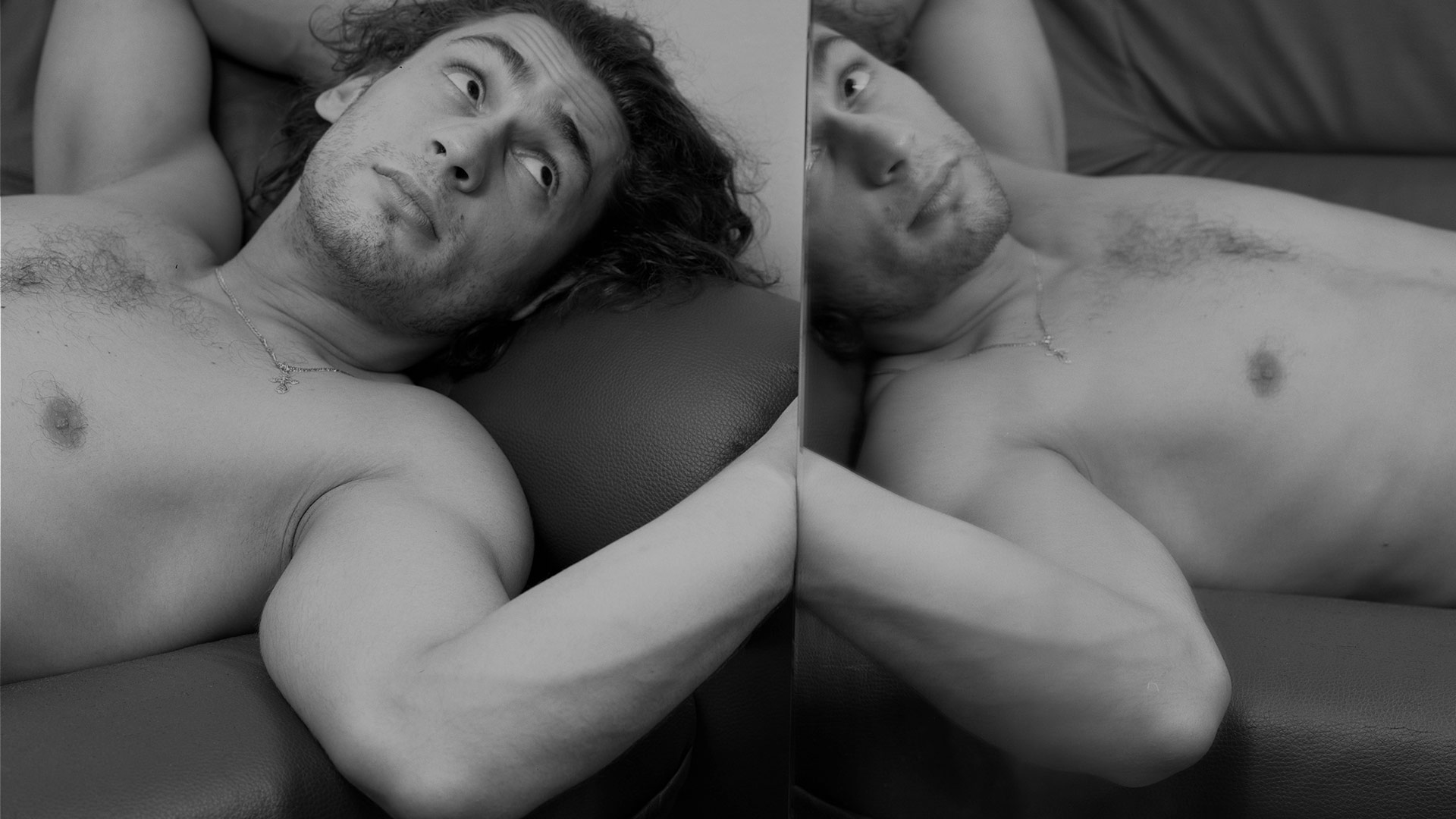
Dana doesn’t want to do the traditional contrived ballet dancer shots that everyone’s been doing since the invention of cameras, so Ivan meets the camera backstage at his practice studio and in his dressing room. He doesn’t say much— he’s swathed in a hoodie and a little impatient, alternating between an untrusting glower and goofy faces that break the ice but still bespeak a surprising self-consciousness. In sweats on a brown couch, he comes across a little like a fit frat guy taking a break after a game of flag football. Definitely not the sophisticated and statuesque flame he embodies onstage. In person, he’s a little bit of a dork.

Dana’s approach is the opposite. Very focused and precise, using a cumbersome 4×5 camera with lights, she’s careful with her tools and her subject, meticulous about what she commits to film. It’s an interesting juxtaposition in the room.

As THE young male ballerina in Putin’s Russia (and by the way, you-know-who is also, a fan), there are many questions Ivan seems uniquely positioned to answer. How does he feel about dance as a discipline— is it the last vestige of Russia’s aristocracy? Does it have a future in the world? What does he have to say to men who see ballet as a feminine discipline? Looking at his social media, we find him posed with Vladimir Putin in his Instagram feed, along with a video of himself voting, and the caption “I fulfilled my civic duty, did you find time to vote for the future of our country?” Does he have political opinions beyond this type of public service message? And what does he see on the horizon for his career? He’s already been branching out into experimental dance and choreography. What’s the inspiration? With his movie-star looks, could he imagine crossing over as a performer in film or TV as Baryshnikov did?

We are told that since Ivan does not speak very good English we should send any substantive interview questions to him in writing. His responses will be translated and then we can follow up with a call to chat. We send questions. Follow up. Weeks go by. After a few indications that his response is “coming soon,” nothing materializes. Finally, he and his people go dark. No begging off, no excuses, just full ghosting. In your face, America!

We know from experience that your average iconic international sex-symbol is sometimes just busy, disorganized, and diva-esque. And it’s clear that Ivan’s not playing the game of trying to be a celebrity in America— he’s serious about dance, which is turning out to be a rewarding use of time. But it’s impossible not to wonder about the cultural communication gap, and what happened there…Any way you slice it, it seems that even post-cold-war, post-glasnost, post-modern, post-everything there’s still curtain between our two worlds that have not been penetrated. Maybe it never will…but then again, Ivan, if you’re reading this, we’re ready when you are.
Nadège Vanhée-Cybulski

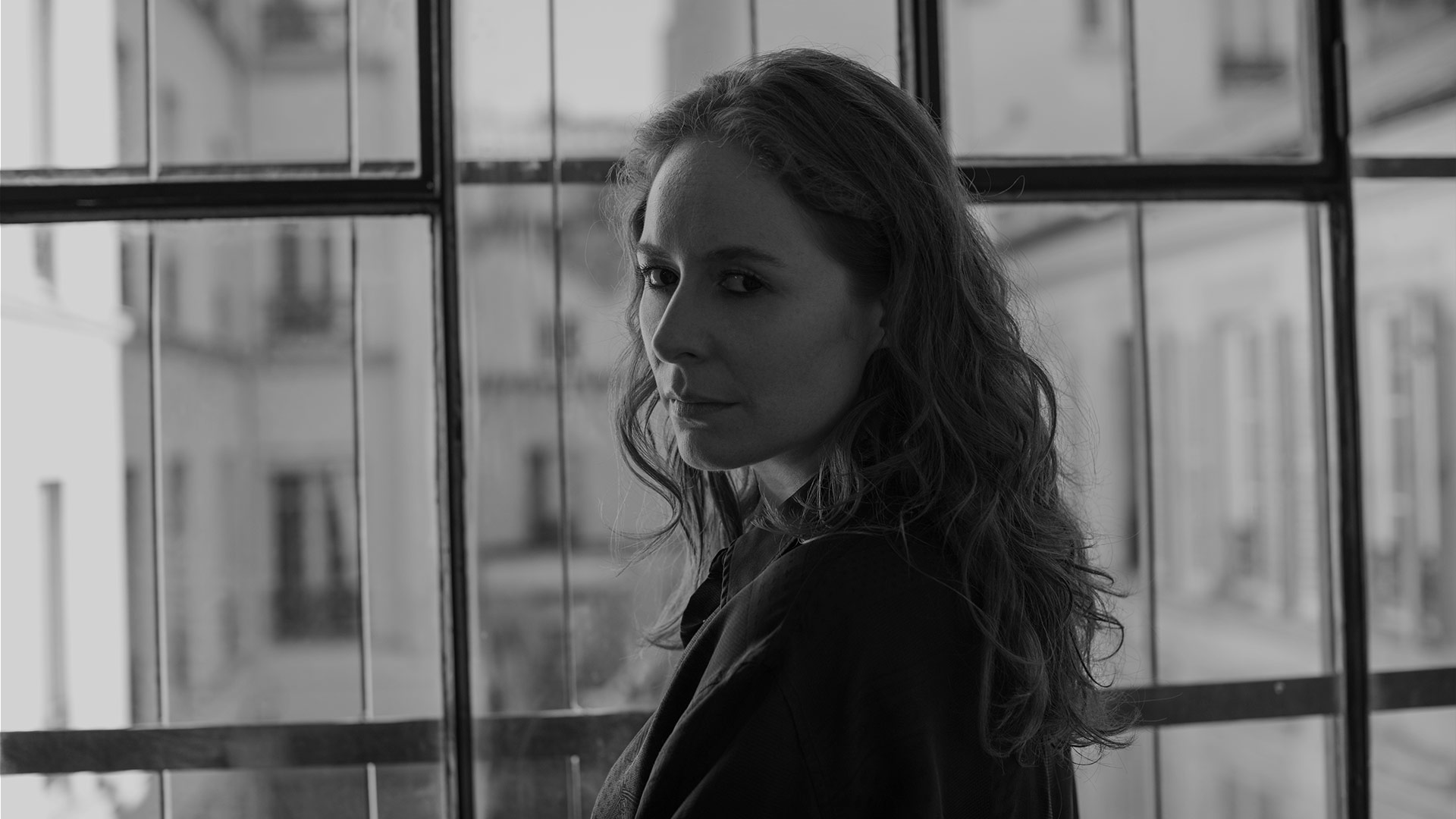
Nadège Vanhée-Cybulski wore no make-up and is incredibly demure and down-to-earth in conversation, so after meeting her five years ago at Café Select in New York City it surprised us to learn that she worked in fashion as a design director for some fine blue-chip brands: Celine, The Row and for Martin Margiela. After her initial meeting with Aleim, Nadège stayed in touch, but suddenly she disappeared and left New York. We heard she moved back to Paris, but in typical Nadège fashion, she did not email-blast her latest achievements nor did she send contact details from her new job account. It wasn’t until Aleim happened to run into her a couple of years ago in London at Frieze that we learned she had ascended to a position of tastemaking-god status, as the creative director of Hermès— the world’s top luxury brand.

This rise to power, and the graceful way she wears it makes her an extremely intriguing character in today’s fashion world, which seems at all times to be burgeoning with big spotlight-grabbing personalities. It turns out that Nadège was born and raised in Lille, a cultural hub in northern France bordering Belgium. She describes herself as Flemish, and she studied fashion at the renowned Royal Academy of Fine Arts in Antwerp, whose talented alumni include Margiela and Raf Simons.

The Antwerp Academy views fashion as an expression of the emotions of our times. Clothing reflects society or, adversely, questions it. Fashion people are not a self-absorbed clique, but committed artists who examine prevailing concepts of ethics and aesthetics, and take a stand on matters of aggression, rejection, denial, and helplessness. This philosophy was the backdrop for Nadège’s education as she formed her design ideology and made the first moves to define her talent.

As evidenced by the high turnover of key personnel in fashion, along with the lawsuits, racially insensitive design tropes and constant insider buzz around interpersonal drama, top leadership in powerhouse brands can be high-pressure, and a successful tenure is often ephemeral. In this landscape, Hermès makes efforts to maintain stability and keep the focus on the quality of its collections. Its creative directors are still considered to be parts of a team rather than celebrity guest-stars, a perfect fit for Nadège, with her refined mystique. She recently told T Magazine “We never talk about luxury inside Hermes. We talk about intelligence” Nadege was kind enough to open up and share her thoughts in the following interview.

Can you tell us about your professional path?

I have always been drawn to aesthetics and somehow this interest has focused onto fashion. I discovered at an early age a fascination for couturiers, suits, the craft of tailoring, textiles…I was always intrigued (and still am) by how and why men and women manifest through clothes their individuality, their beauty.

What was the biggest learning curve of your job at Hermès and how did you deal with it?

The house has an international reputation; as a consequence the spectrum of the public is quite diverse in terms of taste and desires. That was for me the biggest challenge, a broader projection than I had from my previous jobs: understanding and relating to different cultures, habits, reflexes. I had to answers riddles in terms of fits and materials. The good thing is that everyone will acknowledge the quality and expertise that emanates from each Hermès object. This was definitely a beacon for my work. And through this lens I could translate my vision, being faithful to my values and enriching it.

Do you have a daily creative practice?

Yes, it’s actually inherent to my metabolism! I spend most days of the week at the studio. There’s not one day similar to the next. Researching, studying the archives, developing fabrics, fittings, composing silhouettes or projecting concepts for future collections. The creative process is fluid and constant.

Do you have a specific design philosophy?

One of my pillars in design is the maxim of the Bauhaus: “the object should be at once beautiful and functional, practical, balanced in the choice of colors as well as the material.” As a fashion designer, I absolutely relate to this. I also search for the challenge, avoiding the obvious stereotype of the classic silhouette.

How do you come up with your ideas for a collection?

It’s layered. I have ideas that are leitmotifs: the concept of a neo-classic silhouette, the equestrian roots, the Hermès totems (the blanket and the bag locks for instance); they are perennial ideas. Then an intuitive approach comes and juggles theses axes. It’s a projection of women’s feelings and needs; a visual narration takes form from my readings, art works, conversations, sketches or drapes.

Your design practice consists of working on a variety of collections, it also has a management side, how do you keep on top of everything?

I sincerely enjoy working in a team. I have the chance to have experts around me; it would be a pity to spoil this opportunity. We are very close with the studio team and work on different projects and deadlines and therefore it’s very organized. There is a moment where I compose the concept alone but rapidly I like to test its boundaries and have it evolve collaboratively.

Has your minimalist aesthetic changed from your days at Celine and Margiela now that you are in your fourth year at Hermès?

The aesthetic has evolved. When you are designing for a heritage brand the focus is about evolution. The house of Hermès doesn’t need a reboot; it’s solid, nourishing its roots by a perpetual innovation. To be clear, I am more of a purist: searching for genuine material and creation, defining a sharp and precise silhouette with refinement and elegance but always with a relaxed attitude. With Hermès, you can’t be minimalist; you have to, of course, be thoughtful but generosity is crucial.

How has working for Hermès differed from all the other design houses that you worked for?

I would say the dimension of the desirability.

What other art forms do you enjoy? Is there one in particular that inspires your work?

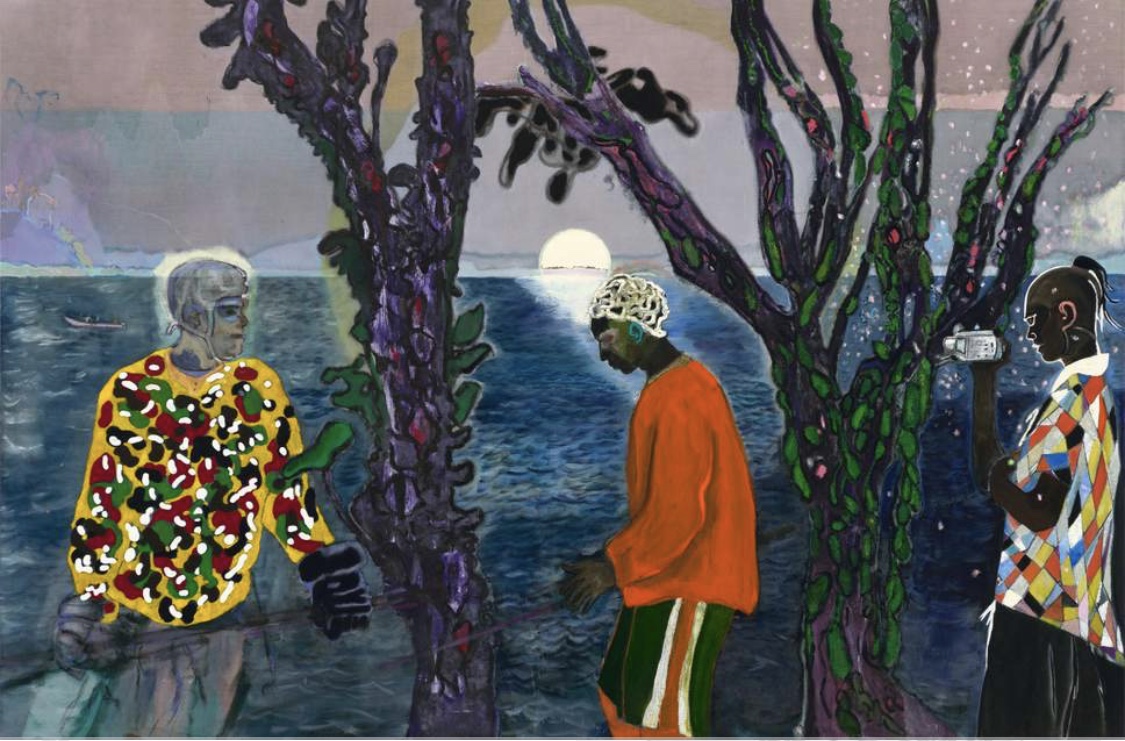
There are a few art forms that inspire me. I love to cross reference different mediums: paintings with literature, art essays. The paintings of Peter Doig resonate deeply when I think of sensations and colors.

Peter Doig oil on canvas “Two Trees” 2017

Who are your influences in general?

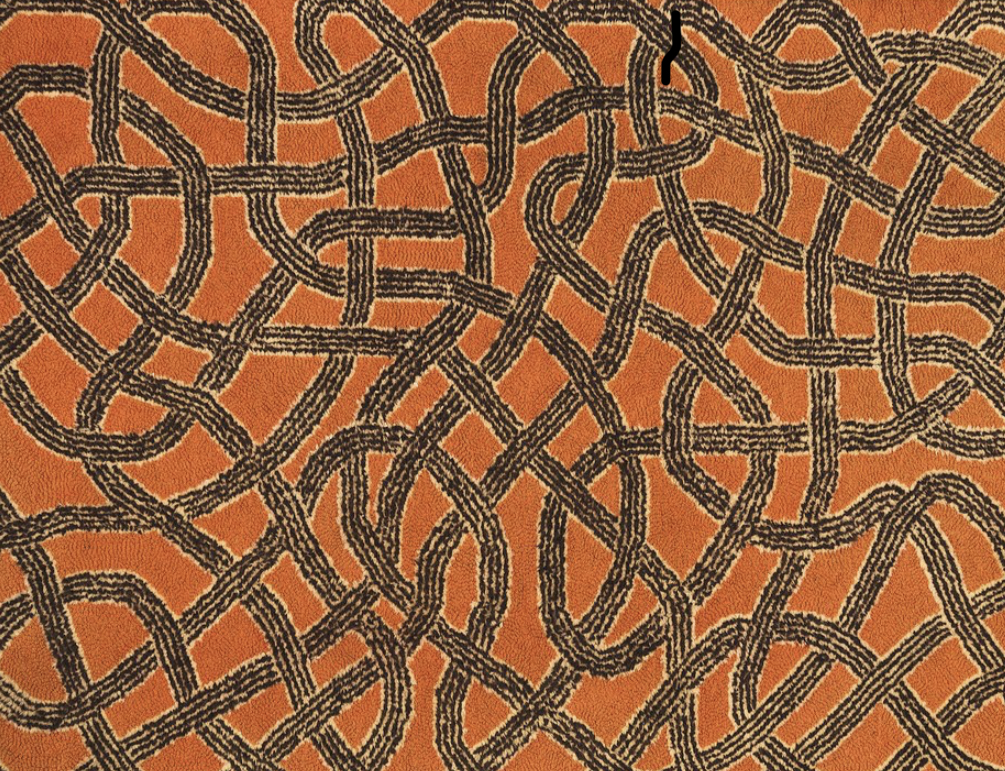
I hold a special admiration for the Artists Josef Albers and Anni Albers. Their life as a couple and also Josef’s influences at the Black Mountain College: educating the soul through different artistic practices.

An Anni Albers rug from 1959.
Josef Albers ‘Study for Homage to the Square’, 1964

You lived in New York City for many years, do you miss it?  If yes, what do you miss about it?

The idea that everything is possible… you just have to roll up your sleeves and do it!

What is a quiet day in Paris like for you? What do you do when you are not working and where do you go?

A simple ritual: the farmers market.

Jesse Williams

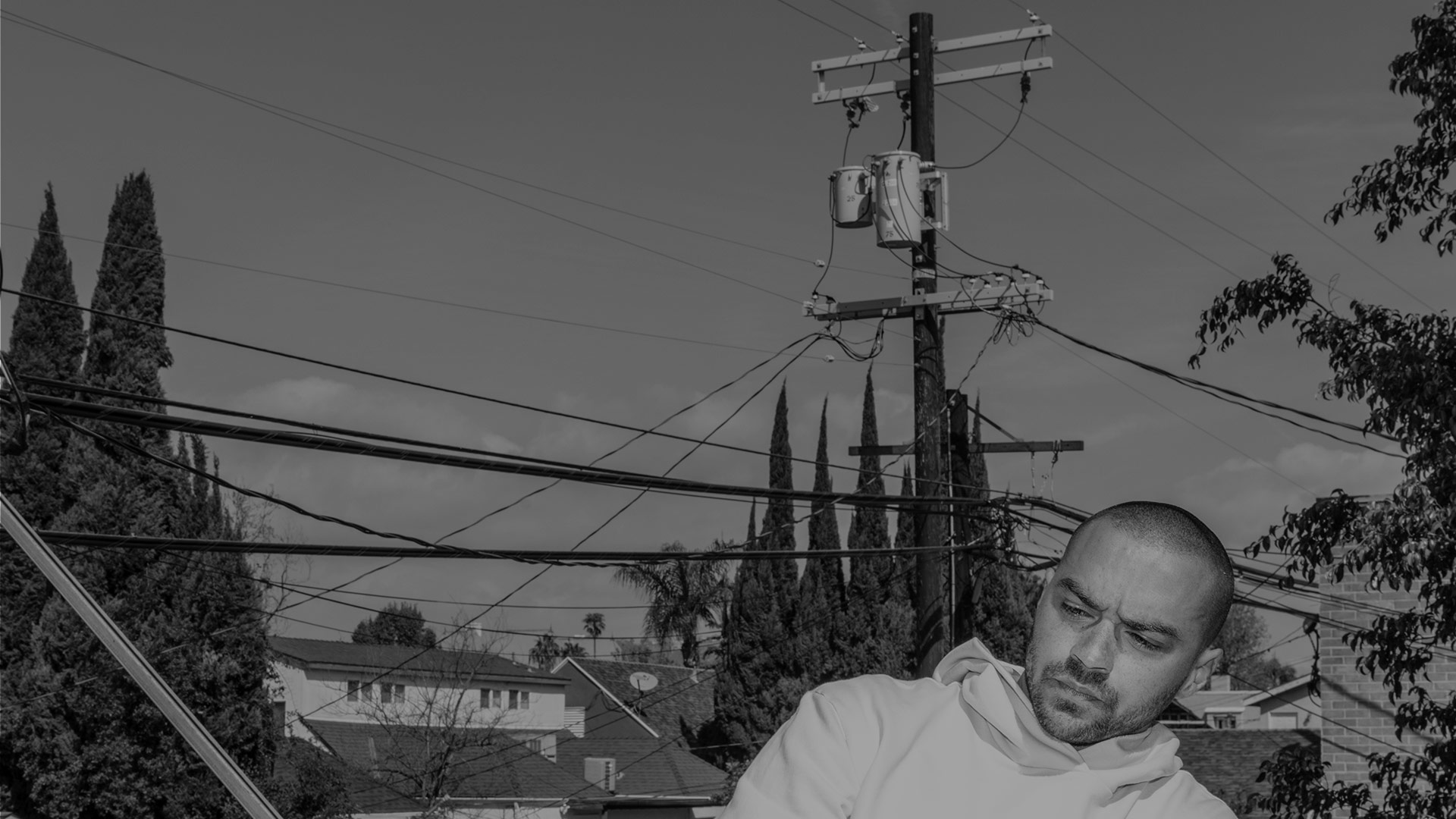
For artist and activist Jesse Williams, Black Arts Matter. Hailing from an creative Chicago family—a painter mother and two brothers who are also artists—it was inevitable that Williams would pursue his own performance career with an eye toward being inclusive and supporting others in creative pursuits. Likewise, growing up in a household in which activism was always a part of his parents’ lives, particularly as it related to the lives of “black and brown folks,” Williams was bound to integrate his talents with his sense of citizenship and responsibility.

Having been politically active throughout high school and college, in his mid twenties Williams found himself pulled into acting through his love of history (which he once taught) and storytelling. “Between cultural competency and historical reality, the narrative of storytelling is our daily lens by which we interpret the world,” he reflects.

After moving to Los Angeles to pursue his acting career, Williams is going into his ninth year on Shonda Rhimes’ ABC series Grey’s Anatomy—he was interviewed about collecting art by Afrofuturists such as Shinique Smith and Iona Rozeal Brown. “Early on, I made a point to big up other black creatives,” he explains. That interview led him to contemporary artist Hank Willis Thomas, who invited him to collaborate on the critically acclaimed interactive project Question Bridge, which focuses on black male identity in America. “[Hank’s mother Dr. Deborah Willis] shared that interview with him,” Williams recalls. “I really connected with Hank’s work, and we hit it off immediately.”

Once Williams discovered what he calls the “real, awesome power” of his platform, he realized he could make a greater contribution by using his fame in the right way. “It never was important whether [my activism] was accepted,” he explains. “My identity was well established, and acting wasn’t something I cared about that much.” However, once Williams integrated his interests, he discovered his métier. “I’m excited that my career is just beginning, about what’s next in the film space. And directing,” he shares. It has just been announced that he will make his feature directorial debut with Till, a film about the aftermath of the Emmet Till lynching in the Jim Crow-era South. “I’m also excited to take the helm in storytelling and to wear the producer hat,” he says. He’s sold a show to Amazon, and he’s a producer on Till, along with Whoopi Goldberg (who will also star), Frederick Zollo, Barbara Broccoli, Thomas Levine, Leah Natasha Thomas, and civil rights filmmaker Keith A. Beauchamp.

As a millennial who fundamentally understands the importance of connecting with his audience, Williams first came to social media somewhat reluctantly through a Myspace page that, “like, 16 people visited,” he recalls. “I came late to Twitter, and I really didn’t get the point until it was described to me as being like a group text to the people you know and follow. I started small [because I] wanted to view it as a place to do what you don’t get to do elsewhere, to show my comedic side,” he reveals. “But because I’m an inherently political person and people are worried about how you get your next paycheck, I’m consistently one step away from deleting all social media.” Having such a high profile also has a more serious downside. “I’ve gotten death threats, handwritten notes, things delivered to my home, where my family lives. Luckily we’re no worse for the wear. I’ve always gotten cyber harassment, but when it comes in person it’s a little bit different.”

As with his activism, Williams soon realized that the ability to make direct connections and to effect change was much greater than the opportunity to crack some jokes. “What keeps you on there is viewing other people—Black people are so creative! Tumblr in particular makes me happy. They’re so fast, [always] figuring out ways we can embrace and utilize it, realizing all this black creativity and expression. With black artists trying to stay sane and employable, [when it’s] hard to get one job—never mind consistent gigs—there are increasingly more opportunities. In this generation of 20 to 40 year olds, there are a number who are participating in social movements, using their voices with increased levels of exposure.”

Such constant exposure comes with an unexpected, more philosophical cost. Before social media, Williams reflects, “it was much easier for folks to look noble and regal in, say, a couple of black & white news photos. Now, with everybody fully [and constantly] exposed, a photo walking into the White House with Congresswoman Maxine Waters might not paint as sweeping a picture. Folks don’t want to romanticize and imagine the conversations anymore. They want to hear ‘em.”

Indeed, in this dire political moment, Williams’ glass is encouragingly half full. “I feel really wonderful and optimistic about the creative culture in this country and the world. People who are marginalized are creating a tremendous quality of work in TV, film, writing, particularly in black expression, finding their own voices, what matters. It’s going to last a lot longer.”

As with his electrifying, galvanizing speech when accepting the Humanitarian Award in 2016 at the BET Awards, Williams doesn’t mince words, and he does not shy away from taking a political viewpoint that posits the arts—and the audience—as catalysts for change. “Now you’ve got attention—what are you going to do? What this has done is woken up the somehow otherwise sleeping segments to mobilize, to get out and participate,” Williams continues. “Once you become awake you can make a difference.”